

Table of Contents
- What Ethical Consumerism Means for Your Shopping Cart
- How to Identify Ethical Brands Without Falling for Marketing
- Sustainable Jewelry Materials: What to Look For
- Conscious Consumerism Tips for Shopping on a Budget
- The Psychological Barriers That Keep You From Shopping Ethically
- What Happens After You Buy: Post-Purchase Lifecycle Management
- Conclusion: Your Ethical Consumerism Guide in Action
- Frequently Asked Questions
Last Updated: October 4, 2026
What Ethical Consumerism Means for Your Shopping Cart
Ethical consumerism is the practice of buying goods and services based on their social and environmental impact, not just price or convenience.
At Fair Pacific Studio, we build our work around this idea. Each piece of handcrafted jewelry we make starts with reclaimed copper, sterling silver, brass, and natural stones, sourced with care and shaped by hand.
The concept has real weight behind it. According to Pew Research Center findings on sustainable shopping habits, a growing share of shoppers say they factor environmental impact into purchases. The Federal Trade Commission's Green Guides also set the rules for how companies can legally describe their environmental claims, which matters when you're trying to separate substance from marketing.
Here's the tension most guides skip: ethical consumerism isn't about being perfect. It's about making one better choice at a time, with clear criteria.
How to Identify Ethical Brands Without Falling for Marketing
The fastest way to identify an ethical brand is to look for third-party certification, published supply chain transparency, and specific claims you can verify. Vague language like "eco-friendly" or "natural" means nothing without proof behind it.
Ask three questions before you buy:
- Does the brand name its suppliers or materials?
- Is there a certification from an independent body?
- Can you find a public statement about labor practices and environmental impact?
If a company can't answer these, that silence tells you something. Ethical manufacturing and fair trade commitments show up in documentation, not slogans. A brand serious about its ethical supply chain will make that information easy to find, because it's proud of it.
Certifications and Labels That Actually Mean Something
Third-party certification is the clearest signal of an ethical rating you can trust. These labels require an independent ethical audit, so a company can't simply award itself the title.
| Certification | What It Verifies | Best For |
|---|---|---|
| Fair Trade Certified | Fair wages, safe conditions | Labor rights |
| B Corp | Social and environmental performance | Overall ethics |
| GOTS | Organic textile standards | Sustainable fabrics |
| FSC | Responsible forestry | Paper, wood, packaging |
A common mistake is treating every green leaf logo as equal. Some are rigorous; others are self-declared. Check who issued the certification and what standard it enforces.
Spotting Greenwashing in Product Claims
Greenwashing is when a company exaggerates or fakes its environmental commitment to sell more. It's the single biggest trap in conscious shopping, and it's everywhere.
Watch for these red flags:
- Vague terms with no data ("planet-friendly," "clean")
- A single green product line from an otherwise unchanged company
- Claims about one small feature that hide a larger problem
- No mention of the supply chain at all
The FTC's Green Guides exist precisely to curb this. When a claim can't be backed up, treat it as marketing noise. Real environmental impact is measurable and specific.
Sustainable Jewelry Materials: What to Look For
Sustainable jewelry materials are those that are recycled, responsibly mined, or reclaimed, and that can be traced back to their source. The material matters as much as the design.
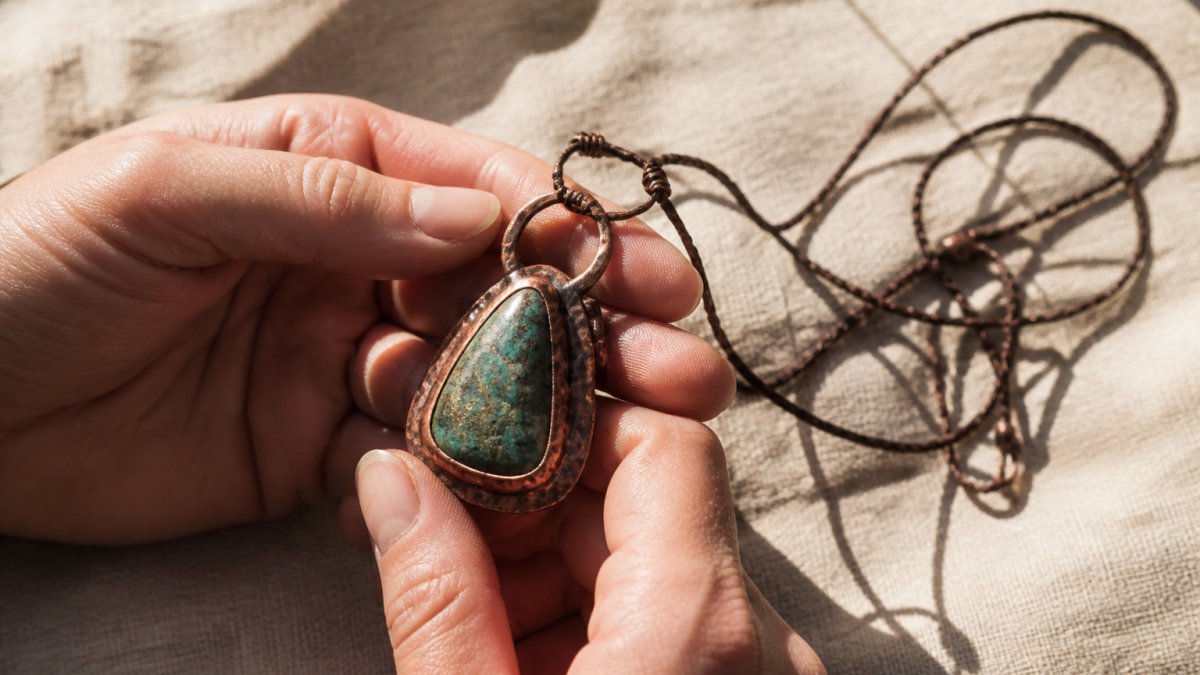
When you're evaluating a piece, focus on these materials:
- Reclaimed metals: Copper, silver, and brass recovered from existing sources reduce new mining demand.
- Recycled sterling silver: Same quality as new silver, far lower environmental cost.
- Natural stones: Look for stones with known origins and ethical extraction practices.
- Recycled gold: A strong ethical alternative to newly mined gold.
This is where Fair Pacific Studio's approach comes in. We work with reclaimed copper, sterling silver, brass, and natural stones, so each piece carries a smaller footprint and a real story.
Conscious Consumerism Tips for Shopping on a Budget
Conscious consumerism tips that actually work start with one principle: buy less, choose well, and keep it longer. Ethical shopping is not a luxury hobby. It's a set of habits anyone can build, but it does require confronting a real tension most guides gloss over: ethical goods often cost more upfront, and not everyone can absorb that premium.
Ethical Consumerism Explained
Fluent Expressions
Here's how to do it without overspending, and without pretending the budget constraint isn't real.
Run the Cost-Per-Wear Math Before You Buy
The sticker price is not the real price. Divide the cost by the number of times you'll realistically wear or use the item. A $120 pair of well-made boots worn 200 times costs $0.60 per wear. A $40 pair worn 20 times before falling apart costs $2.00 per wear. The cheaper item is more expensive.
This math works for jewelry, clothing, kitchen tools, and furniture. It doesn't work for everything, you can't cost-per-wear a one-time purchase, but for anything you'll use repeatedly, it reframes the decision.
Prioritize Secondhand First
Thrift stores, resale apps, and vintage shops cut demand for new production. The environmental case is strong: extending a garment's life by even a few months reduces its carbon, water, and waste footprint significantly compared to buying new.
Practical mechanics:
- Online resale: Poshmark, Depop, eBay, and Mercari for clothing; Facebook Marketplace and Craigslist for furniture and home goods.
- Local thrift: Goodwill, Salvation Army, and independent charity shops. Inventory varies by location and day.
- Consignment: Higher-quality, curated secondhand at a fraction of retail.
- Buy-nothing groups: Local Buy Nothing Project groups and Freecycle offer free goods within a community.
The trade-off: secondhand takes time. You can't always find your size or the exact item you want. Treat it as a treasure hunt, not a one-click purchase.
Buy Fewer, Better Items, But Define "Better"
Minimalism isn't deprivation; it's focus. But "better" doesn't automatically mean "more expensive." Better means:
- Materials that hold up (full-grain leather, solid wood, reclaimed metals)
- Construction that can be repaired (stitched soles, replaceable parts)
- A design that won't look dated in two years
- A brand that publishes its supply chain
A $30 well-made cotton shirt from a transparent small brand can outperform a $90 designer shirt with no traceability. Price and ethics don't always correlate.
Support Small-Batch Makers, and Know the Trade-offs
Small studios often have clearer supply chain traceability than mass retailers because the maker knows their suppliers personally. But small-batch also means:
- Higher per-unit costs (no economies of scale)
- Limited inventory and longer lead times
- Less capacity to absorb returns or offer deep discounts
If you can't afford small-batch, that's not a moral failure. Buying secondhand, repairing what you own, and reducing total consumption are equally valid ethical moves.
Time Your Purchases and Avoid Impulse Buys
Fast fashion trends are engineered to trigger impulse buys. Off-season shopping, waiting 48 hours before any non-essential purchase, and unsubscribing from brand marketing emails all reduce impulse spending. The money you don't spend is money you can redirect toward one meaningful, lasting piece.
The Accessibility Reality
Ethical consumerism has an accessibility problem. Not everyone has the time to thrift, the budget for certified goods, or the transportation to reach resale shops. Acknowledging that isn't an excuse, it's a starting point. The goal isn't to buy your way to virtue. It's to make the best choice available within your actual constraints, and to push for systemic change (better labeling laws, extended producer responsibility, wage standards) that makes ethical options the default rather than the premium.
The circular economy rewards this approach. When you buy quality and care for it, you keep items out of landfills and reduce your overall carbon footprint. But the circular economy only works if it's accessible, which is why the most impactful budget tip is also the simplest: buy less, and make what you already own last longer.
The Psychological Barriers That Keep You From Shopping Ethically
The biggest barrier to ethical shopping isn't money. It's psychology. Most guides ignore this, and it's exactly where people get stuck.
Three forces work against you:
- Analysis paralysis. Too many certifications and conflicting claims make it easier to buy nothing or default to habit.
- Guilt and perfectionism. The belief that one imperfect choice ruins everything leads to giving up entirely.
- Distance from impact. When you can't see the factory or the landfill, the harm feels abstract.
The fix is to lower the stakes. You don't need a perfect ethical rating on every purchase. Pick one category, apply clear criteria, and improve over time. Progress beats paralysis.
What Happens After You Buy: Post-Purchase Lifecycle Management
Post-purchase lifecycle management is the practice of caring for, repairing, and eventually responsibly disposing of what you buy.
A purchase isn't the end of your responsibility. It's the start.
- Care: Clean and store items properly to extend their life. Well-kept jewelry lasts decades.
- Repair: Fix rather than replace. A re-soldered clasp beats a new necklace.
- Resell or gift: Pass pieces on instead of discarding them.
- Recycle: Recover metals and stones through reputable recyclers when an item truly can't be used.
This is also where the digital footprint of consumption comes in. Every online order carries packaging, shipping, and data-center energy costs. Consolidating orders and choosing minimal packaging reduces that hidden environmental impact.
Fair Pacific Studio designs pieces to be worn for years, not seasons. Timeless, grounded designs mean you're not replacing them when a trend fades, which is post-purchase thinking built into the product itself.
Conclusion: Your Ethical Consumerism Guide in Action
The hardest part of ethical shopping is starting, because the criteria feel endless and the claims feel unreliable. You don't need to solve the whole supply chain. You need one clear framework and one better choice.
At Fair Pacific Studio, we make that choice easier with handcrafted jewelry built from reclaimed copper, sterling silver, brass, and natural stones. Each piece is made one at a time, designed to last, and shaped by the raw textures of earth, sea, and sky.
Frequently Asked Questions
What is ethical consumerism in simple terms?
Ethical consumerism means buying products and services that align with your values, considering how items are made, who makes them, and their environmental impact. It involves researching supply chain transparency, choosing fair trade or third-party certified goods, and avoiding companies with poor labor rights records. You don't have to be perfect, just intentional about where your money goes.
How can I start shopping more ethically on a budget?
Start small. Buy less but choose better quality. Thrift or buy secondhand first, then invest in handmade or fair trade items from small businesses. Use conscious consumerism tips like making a list before shopping, waiting 48 hours before non-essential purchases, and prioritizing items you'll use daily. Even swapping one fast fashion purchase per month for a sustainable alternative makes a measurable difference over a year.
How do I identify greenwashing when shopping?
Watch for vague terms like 'natural' or 'eco-friendly' without third-party certification. Check if claims are backed by specific standards such as Fair Trade Certified, B Corp, or GOTS. Look for supply chain traceability on the brand's website. If a company can't tell you where materials come from or who made the product, that's a red flag. Genuine ethical brands publish audit results and sourcing details openly.
What are sustainable jewelry materials I should look for?
Look for reclaimed or recycled metals like copper, sterling silver, and brass. Natural stones with known origins are better than lab-created stones with unclear supply chains. Handcrafted jewelry from small studios often has better traceability than mass-produced pieces. Ask the maker directly about sourcing. Brands that use reclaimed materials and can explain their supply chain are usually more transparent about ethical standards.
What does ethical mean in the context of supply chains?
An ethical supply chain means every step from raw material extraction to finished product respects labor rights, environmental standards, and fair wages. It requires supply chain transparency, regular ethical audits, and third-party certification where possible. For jewelry, this means knowing the mine or recycled source of metals and stones, and confirming that workers were paid fairly and worked in safe conditions.
What are the benefits of supporting small-scale, handcrafted businesses?
Small-scale makers often have more control over their supply chain, use sustainable sourcing, and produce in smaller batches with less waste. Your money supports a real person, not a mass-production line. Handcrafted items tend to last longer because they're made with care. You also get unique pieces, direct communication with the maker, and often better repair or return policies than large retailers offer.