

Table of Contents
- What to Look for in a Hammered Silver Cross Necklace
- Pendant Design, Shape, and Hammered Texture
- Sterling Silver Hammered Cross Necklace: Purity, Finish, and Durability
- Pendant Dimensions and Chain Style Compared
- Silver Cross Necklace Chain Length: Finding Your Fit
- Hammered Copper and Silver Cross Necklace: Mixed-Metal Appeal
- How to Clean Sterling Silver Jewelry and Prevent Tarnish
- Everyday Wear, Symbolism, and Gifting a Hammered Silver Cross
- Conclusion
- Frequently Asked Questions
Last Updated: October 19, 2026
What to Look for in a Hammered Silver Cross Necklace
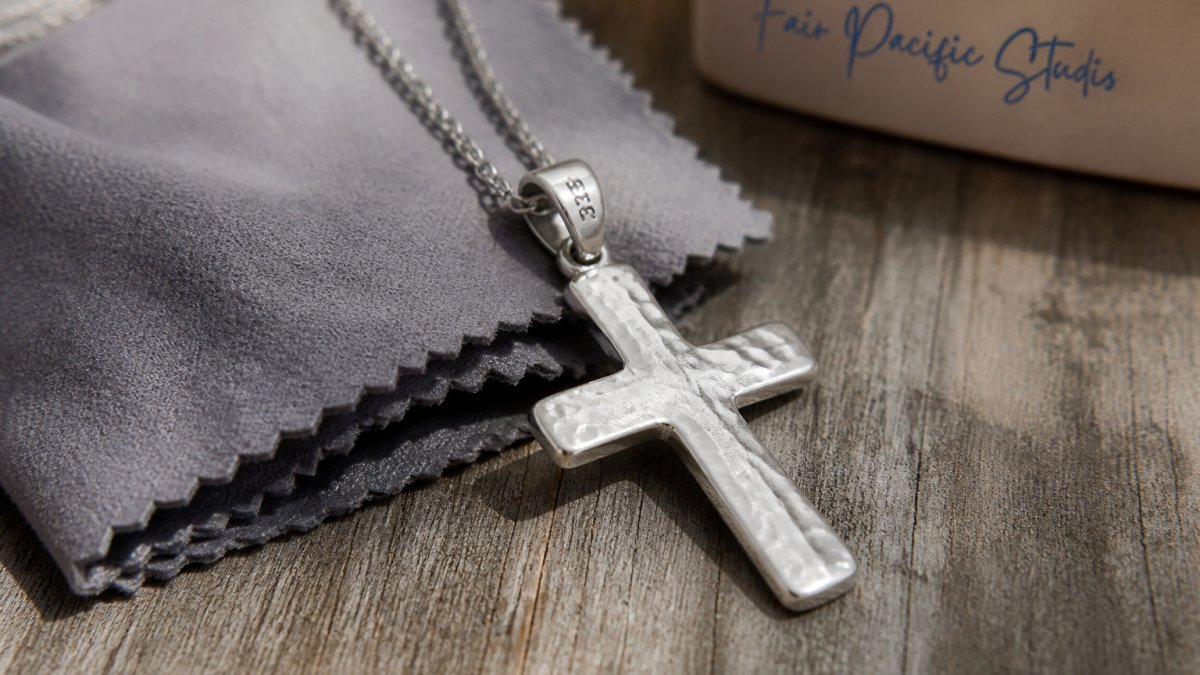
A hammered silver cross necklace is a pendant whose surface has been struck with a jeweler's hammer to create small facets and dimples that catch light unevenly. That texture hides scratches, reads as handmade rather than machine-stamped, and gives a simple cross real presence on a chain.
Most buying guides skip what actually decides whether you'll wear the piece for years: how the metal, the finish, and the chain work together. Below, I'll walk through the specs that matter.
The short version: a hammered silver cross is only as good as its silver purity, its bail, and its chain. Get those three right and the necklace lasts. Get them wrong and you'll be replacing it in a year.
Pendant Design, Shape, and Hammered Texture
The hammered texture is not one look. It ranges from light dimpling that reads almost smooth from a distance to a deep, faceted surface that looks forged. Ask which one you're getting before you buy.
Design details worth checking:
- Cross shape: A Latin cross (longer lower arm) is the classic. A equal-armed cross reads more modern and minimalist.
- Edge treatment: Clean, polished edges feel more refined. Rough or antiqued edges lean rustic.
- Finish contrast: An oxidized finish darkens the recesses so the raised hammer marks stand out. Polished-only finishes are brighter but show wear sooner.
- Bail: The loop the chain passes through. A soldered, closed bail is stronger than an open jump ring, which can pull apart under daily wear.
Sterling Silver Hammered Cross Necklace: Purity, Finish, and Durability
The Federal Trade Commission's jewelry guides require sellers to describe precious metal content accurately, so a legitimate listing should state sterling, fine silver, or plated clearly rather than just "silver."
Durability comes down to metal purity, bail construction, and thickness. A thin stamped pendant dents; a cast or hand-forged piece with real weight holds its shape.
Pendant Dimensions and Chain Style Compared
Sizing is where online shopping goes wrong most often. Standardize the numbers before you compare.
| Specification | What to Check | Why It Matters |
|---|---|---|
| Pendant height | Measured top of bail to bottom of cross | Determines visual weight on the chest |
| Pendant width | Widest point of the crossbar | Wide crosses sit flatter, narrow ones hang straighter |
| Pendant weight | Grams, if listed | Under 5g reads delicate; 15g+ reads substantial |
| Chain style | Box, cable, or curb | Box chain suits heavier pendants; cable suits light ones |
| Chain width | Millimeters | Under 1.5mm is delicate; 2.5mm+ is a men's or statement look |
| Bail opening | Must clear the chain width | Too tight and the pendant won't slide |
Real listings illustrate the range. Marketplace examples range widely in price, and that spread is mostly material and construction, not design.
Silver Cross Necklace Chain Length: Finding Your Fit
Chain length changes the whole look, and it's the easiest thing to get wrong. Most guides list the standard lengths and stop there. Here's the practical method I give customers.
The standard lengths and where they land:
- 16 inches: Sits at the base of the throat. Reads delicate and feminine. Best for small, lightweight crosses under about 1 inch tall.
- 18 inches: The most common length. Lands at the collarbone and works with almost any neckline.
- 20 inches: Drops just below the collarbone. Good for medium pendants and for layering.
- 22 inches: Sits on the upper chest. A men's standard, and a good choice for a heavier cross.
- 24 inches and longer: Below the sternum. Statement territory, and the right range for a substantial hammered pendant.
How to measure before you buy. Take a necklace you already wear and like, lay it flat, and measure end to end with the clasp closed. That number is your target length.
Account for pendant height. The number on the listing is the chain length, not where the cross ends up.
Adjustability and the mechanism. Extenders add 2 to 3 inches and are the simplest fix for gifting.
For a silver cross necklace chain length decision, measure a necklace you already wear and like rather than guessing. Length is the variable you control; pendant height and chain width are the ones you check against it.
Hammered Copper and Silver Cross Necklace: Mixed-Metal Appeal
Mixed-metal pieces pair a silver cross with copper accents, often at the bail, the edges, or a small wrap detail. Copper's reddish tone softens silver's coolness, and the contrast makes the hammered texture more visible.
A hammered copper and silver cross necklace also ages differently. Copper develops a patina over time, darkening to a deep brown, while the silver stays brighter. Some people love that living finish; others want it uniform. Neither is wrong, but know which one you're signing up for.
What to know before choosing mixed metal:
- Copper can leave a green mark on skin when it reacts with sweat and skin oils. A clear sealant or a backing layer reduces this, but sealants wear over time on a textured surface, so expect to reapply or accept the patina.
- Copper and silver tarnish at different rates, so cleaning needs a gentler hand on the copper. A silver polishing cloth is fine on the silver; on copper it can strip the patina you may have wanted. Wash the whole piece with mild soap and water, dry it fully, and polish only the silver areas.
- Sensitive skin: sterling silver is generally well tolerated, but copper and base metals are more common irritants. If you've reacted to cheap jewelry before, a sterling-only piece is the safer bet. If you want the mixed look anyway, ask whether the copper touches the skin directly or sits on the front face only.
- Wear points: on a hammered surface, the raised marks are the high points, so any plated or sealed layer wears there first. Solid copper and solid sterling don't have that problem, which is one reason mixed-metal pieces from a maker cost more than plated lookalikes.
How to judge a mixed-metal listing. Look for the words solid, sterling, and .925 next to the silver, and solid copper next to the copper. The Federal Trade Commission's jewelry guides require sellers to describe precious metal content accurately, so a legitimate listing should state the metals clearly rather than lean on tone words.
How to Clean Sterling Silver Jewelry and Prevent Tarnish
Tarnish is normal. Silver reacts with sulfur compounds in air and on skin and darkens over weeks. Hammered surfaces hide light tarnish better than polished ones because the texture breaks up the reflection.
To clean sterling silver jewelry:
- Wash with warm water and a drop of mild dish soap.
- Use a soft cloth or a very soft brush, working along the hammer marks, not across them.
- Rinse and dry completely with a lint-free cloth.
- Use a silver polishing cloth for light tarnish. Skip abrasive pastes on textured surfaces, since residue collects in the dimples.
- Store in an airtight bag with an anti-tarnish strip, away from humidity.
The American Gem Society's jewelry care guidance recommends keeping silver away from chlorine, perfume, and hair products, all of which speed tarnish. Wear your necklace last when getting ready and take it off first at night.
Everyday Wear, Symbolism, and Gifting a Hammered Silver Cross
A hammered silver cross works as daily wear because the texture is forgiving. It doesn't show fingerprints, hides small scratches, and reads as intentional rather than flashy. Wear it solo for a clean, grounded look, or layer it with a shorter chain for depth.
The symbolism matters to a lot of buyers. A cross necklace is a faith reminder first and a piece of religious jewelry second, worn for personal meaning rather than display.
For gifting, three things decide whether it lands:
- Chain length: 18 inches is the safest default. Include an extender if you're unsure.
- Metal choice: sterling silver is the most universally wearable.
- Made-to-order timing: handcrafted pieces often ship after a production wait, so order well ahead of a birthday, wedding, or holiday.
At Fair Pacific Studio, every piece is handcrafted one at a time using reclaimed copper, sterling silver, brass, and natural stones, with a bohemian-meets-minimalist look meant to stay timeless rather than trend-driven. If you have dexterity concerns, ask about clasp options before ordering. Browse the catalog to see current designs.
Conclusion
The hardest part of buying a hammered silver cross necklace isn't finding one. It's telling a hand-forged sterling piece apart from a plated lookalike before it arrives. Check the purity stamp, the bail construction, and the chain width, and the rest follows.
Fair Pacific Studio makes each piece by hand from reclaimed and precious metals, with natural textures and a calm, grounded aesthetic. Start with the catalog and reach out with any sizing or clasp questions.
Frequently Asked Questions
How can I tell whether a hammered cross necklace is sterling silver?
Look for a .925 or sterling stamp on the back of the pendant or near the bail. Sterling silver is 92.5% silver, and reputable makers mark it. A magnet test helps: sterling silver is not magnetic, so a pendant that sticks to a magnet is likely plated base metal. Also check the listing for the words sterling silver rather than silver tone or silver plated. If the seller does not state purity, ask before buying.
What chain length works best with a hammered silver cross pendant?
It depends on pendant size and how you wear it. An 18-inch chain sits near the collarbone and suits small to medium pendants. A 20-inch chain falls just below the collarbone and is the most versatile for everyday wear. A 22- or 24-inch chain works better for larger or heavier crosses and for wearing over a shirt. If you plan to layer, choose a shorter length so the cross sits above other chains.
How do you clean a hammered silver cross necklace?
Wash it in warm water with a drop of mild dish soap, then work a soft toothbrush gently into the hammered texture to lift dirt from the recesses. Rinse and dry with a soft cloth. For tarnish, use a silver polishing cloth. Avoid abrasive cleaners and ultrasonic machines on oxidized or antiqued finishes, since they can strip the darkening. Store the necklace in a dry pouch away from humidity.
Can you wear a hammered silver cross necklace every day?
Yes, sterling silver holds up to daily wear, and a hammered finish hides small scratches better than a polished surface. Remove it for swimming, showering with harsh soap, and heavy exercise, since chlorine and sweat speed tarnish. Wipe it with a soft cloth after wearing and store it dry. A lightweight pendant on a secure chain is the most comfortable choice for all-day wear.
What is the difference between a hammered and polished silver cross necklace?
A hammered finish has a textured, faceted surface that catches light in small flashes and reads as rustic or handcrafted. It also masks minor scratches. A polished finish is smooth and mirror-like, reflecting light evenly, but shows fingerprints and wear more readily. Hammered pieces often pair with an oxidized or antiqued finish to deepen the texture, while polished crosses tend toward a cleaner, more formal look.