
Table of Contents
- Start Here: Identify Your Reclaimed Copper Before You Clean
- How to Clean Copper with Dish Soap (The Safest First Step)
- How to Remove Tarnish from Copper Jewelry with Lemon, Salt, and Vinegar
- Baking Soda and Ketchup: What Works and What to Skip
- The Best Cleaner for Copper Jewelry: Commercial Options vs. Homemade
- When Not to Clean: Preserving Patina on Reclaimed Copper
- How to Prevent Copper Jewelry from Tarnishing
- Conclusion: Caring for Your Reclaimed Copper Jewelry
- Frequently Asked Questions
Last Updated: October 14, 2026
Start Here: Identify Your Reclaimed Copper Before You Clean
Learning how to clean reclaimed copper jewelry starts with one step most guides skip: figure out what you have before anything touches your clean reclaimed copper.
Reclaimed copper jewelry is made from salvaged copper cut, shaped, and finished by hand rather than mined new, which is exactly why it needs a gentler approach.
Here's what nobody tells you: tarnish is not damage.
So before you reach for the lemon, run this quick check:
- Look for a clear coat. A shiny, plastic-like sheen that doesn't dull evenly usually means a lacquer or sealant.
- Check for two-tone color. Silver or gold tones over copper often mean plating, which can flake.
- Find the joints. Gray, bumpy seams are usually solder, and solder is softer than copper.
Coatings, Plating, Solder, and Mixed Materials
A coated or plated piece needs a different plan than bare copper. Scrub a lacquered bracelet with an abrasive and you strip the coating in patches, leaving a blotchy finish.
For plated or mixed pieces, stick to a damp cloth and mild soap. Skip the acids entirely.
Match the Method to the Source: Pipe, Wire, and Coins
Where the copper came from shapes how it cleans. Old pipe carries heavy, dark oxidation and mineral scale. Wire is thin and bends easily, so it needs a light touch. Coins are usually an alloy, not pure copper, and may be plated.
Reclaimed copper by source:
| Source | Typical Condition | Best First Method |
|---|---|---|
| Pipe | Heavy oxidation, scale | Dish soap, then lemon and salt |
| Wire | Light tarnish, bends easily | Dish soap only |
| Coins | Alloy, often plated | Damp cloth, no acid |
How to Clean Copper with Dish Soap (The Safest First Step)
Dish soap is the best cleaner for copper jewelry when you're not sure what you're dealing with. It lifts dirt, skin oils, and residue without stripping a finish.
Why Reclaimed Copper Needs a Pre-Clean
Salvaged copper arrives with a history. Pipe carries mineral scale and sealant residue. Wire carries insulation adhesive and drawing lubricant. Coins carry skin oils, pocket grime, and sometimes a decades-old lacquer coat.
A pre-clean does three things: it removes the layer hiding the metal's real condition, it reveals whether the piece is bare, coated, or plated, and it keeps your polishing cloth from carrying scratch-causing grit.
What to Remove Before You Polish
Work through this list before any acid or abrasive touches the piece:
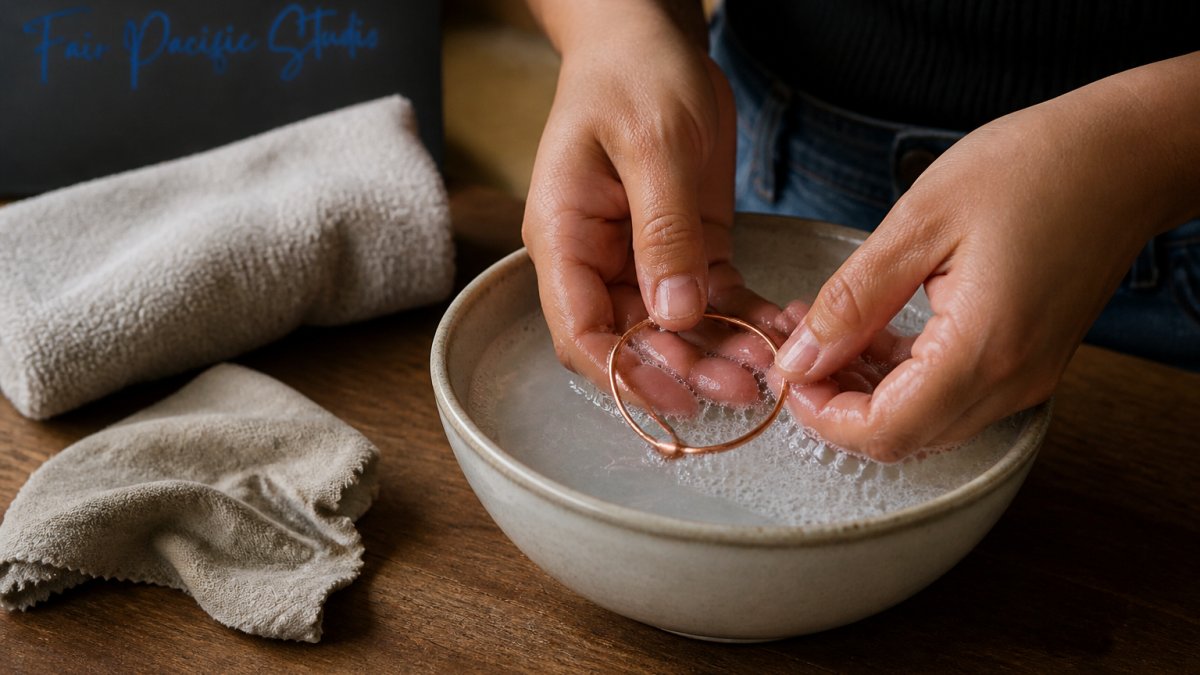
- Grease and oil. Skin oils, machine oil, and cooking residue respond to dish soap and warm water. A drop of Dawn or a comparable mild liquid soap in a ceramic or glass bowl is enough.
- Adhesive and tape residue. Old tape, sticker glue, and insulation adhesive soften with a little warm soapy water and a fingernail or a soft plastic scraper. Do not use a metal blade on copper, it gouges.
- Dirt in crevices. A soft-bristle toothbrush (the kind sold for dentures works well) reaches into hammered texture, wire wraps, and solder seams without scratching.
The Step-by-Step Pre-Clean
Here's how I'd do it:
- Fill a ceramic or glass container with warm water and a drop of mild soap.
- Soak a few minutes to loosen dirt. Heavy grime can sit up to ten minutes on bare copper; keep coated pieces to two or three.
- Swirl gently, then work crevices with a soft toothbrush.
- Rinse under warm water and pat dry right away.
- Inspect under good light, note any clear coat, two-tone plating, solder seams, or set stones before going further.
- Buff with a dry cloth for a soft shine.
If the piece still looks dull, that's tarnish, not dirt. Move to an acid only after confirming the piece is bare copper, not coated, plated, or set with stones.
How to Remove Tarnish from Copper Jewelry with Lemon, Salt, and Vinegar
To remove tarnish from copper jewelry, an acid plus salt does the work.
How To Clean Copper Jewelry FAST
Laura Beth Love
For the lemon version:
- Squeeze fresh lemon juice into a glass or ceramic bowl.
- Add a spoonful of salt and stir until it mostly dissolves.
- Soak the piece for a few minutes, then swirl.
- Rinse well and dry completely.
The vinegar version follows the same steps with white vinegar instead of lemon. Don't use a metal bowl, it can react with the acid and leave residue on your jewelry.
A word of caution: acid removes tarnish but also strips intentional patina and dulls a polished finish.
Baking Soda and Ketchup: What Works and What to Skip
Baking soda works as a gentle polish, not a soak.
Ketchup is the one I'd skip. It contains vinegar and sugar, so it removes some tarnish, but the sugar leaves a sticky residue that traps dirt and invites more tarnish.
What most guides miss: abrasives like baking soda can scratch a soft, hand-finished surface. Fine on textured or hammered pieces; on mirror-polished ones, use the lightest touch you can.
The Best Cleaner for Copper Jewelry: Commercial Options vs. Homemade
The best cleaner for copper jewelry depends on the piece, not the brand. On reclaimed copper, the deciding factor is rarely how strong the cleaner is, it's whether the piece can survive the method at all. A lacquered bracelet, a plated coin pendant, and a bare pipe-copper cuff need three different answers, and the wrong one causes irreversible damage.
Match the Method to What's Actually on the Metal
Before picking a cleaner, run the identification check from the top of this article. Then use this table:
| Option | Best For | Watch Out For |
|---|---|---|
| Dish soap and warm water | Bare or coated copper; pre-cleaning any piece | Won't remove tarnish |
| Lemon or vinegar and salt | Bare copper with heavy tarnish | Strips patina, dulls polish, attacks solder and stones |
| Baking soda paste | Light tarnish on textured or hammered metal | Can scratch mirror-polished surfaces |
| Commercial copper cleaner | Fast results on tough tarnish on bare copper | Read the label; many contain abrasives or acids that damage coatings |
| Jewelry cleaner for delicate or plated pieces | Plated, soldered, or stone-set reclaimed pieces | Slower, and may not fully remove heavy oxidation |
When to Skip Acid and Abrasive Methods Entirely
Some reclaimed pieces should never see lemon, vinegar, or baking soda. Skip acids and abrasives if:
- The piece is lacquered or sealed. Acid creeps under the coating at chips and edges, lifts it in patches, and leaves a blotchy finish that looks worse than the tarnish you started with.
- The piece is plated. Silver- or gold-toned plating on a copper base is usually only microns thick. Acid and abrasives cut through it, exposing the copper underneath in streaks.
- The piece has solder seams. Solder is softer and more chemically reactive than copper. Acid dulls it and abrasives wear it down, weakening the joint.
- The piece has set stones, leather, cord, or painted details. Acid dulls or cracks porous stones, water loosens adhesive, and abrasives scratch paint.
For any of those cases, a commercial cleaner formulated for delicate or plated jewelry is safer. Follow the label and test on a hidden spot first, the inside of a cuff, the back of a pendant, or under the clasp.
Patch-Test Before You Commit
A patch test takes two minutes and prevents the most common reclaimed-copper mistake: stripping a finish you can't put back. Pick a hidden spot, apply your planned method, wait the full soak time, rinse, and dry. Compare it to the surrounding metal under good light. If the finish looks uneven, the coating lifted, or the color shifted, stop and switch to a gentler method.
A Practical Comparison of Effort and Risk
Homemade mixes cost less and use ingredients you already have, but they're less predictable on coated or mixed-metal pieces, you're guessing at concentration and soak time. Commercial cleaners give consistent results and often include a protective step, but many are designed for bare copper and will damage plating or lacquer as fast as lemon juice. The honest trade-off: homemade methods are fine on bare, unset copper; commercial cleaners made for delicate jewelry are safer on anything coated, plated, soldered, or set with stones.
When Not to Clean: Preserving Patina on Reclaimed Copper
Sometimes the right move is to leave the piece alone. Patina is the darkened, aged surface copper develops over time, and on reclaimed pieces it's often the whole point, the difference between metal that looks salvaged and metal that looks brand new.
So ask yourself what you want before you clean:
- Want a bright, shiny finish? Clean it.
- Want the aged, handmade look? Leave the patina and only remove dirt.
- Not sure? Clean a small hidden spot and compare.
How to Prevent Copper Jewelry from Tarnishing
To prevent copper jewelry from tarnishing, cut off the two things that cause it: moisture and air. You can't stop tarnish forever, but a few habits slow it down a lot.
- Keep copper dry. Put jewelry on last, after lotion and perfume.
- Wipe pieces with a soft cloth after wearing to remove skin oils.
- Store each piece in a dry place, ideally a sealed bag with an anti-tarnish strip.
- Keep copper away from humidity, like bathrooms and kitchen windowsills.
For pieces you don't wear often, a small zip bag with the air pressed out beats an open jewelry box. Air is the enemy here.
Conclusion: Caring for Your Reclaimed Copper Jewelry
Reclaimed copper rewards patience. Match the method to the metal, start with the gentlest option, and respect the patina that makes salvaged pieces worth owning. Do that, and a handcrafted piece stays beautiful for years.
That's the approach behind every piece at Fair Pacific Studio. Each design is handcrafted one at a time, made with reclaimed copper, sterling silver, brass, and natural stones, and built to keep the raw texture of the earth, sea, and sky.
Frequently Asked Questions
Can copper jewelry be washed with Dawn dish soap?
Yes, mild dish soap like Dawn works well for cleaning reclaimed copper jewelry. Mix a few drops in warm water, soak the piece for a few minutes, then use a soft cloth to wipe away dirt and residue. Rinse thoroughly and dry immediately. Avoid harsh detergents or abrasive scrubbers, which can scratch the metal or strip a deliberate patina. Dish soap is the safest first step before trying lemon, vinegar, or baking soda.
How do I remove tarnish from reclaimed copper jewelry without damaging it?
Start with the gentlest method: warm water and mild dish soap. If tarnish remains, try a paste of lemon juice and salt or white vinegar and salt. Apply with a soft cloth, rub gently, then rinse and dry. For pieces with stones, solder, or mixed metals, skip acidic soaks and use a commercial copper cleaner labeled safe for jewelry. Always test on a small area first, and avoid abrasive pads that scratch the surface.
Can you clean copper jewelry with ketchup?
Ketchup can remove light tarnish from copper because its vinegar and tomato acids react with oxidation. Apply a thin layer, let it sit for a few minutes, then wipe with a soft cloth and rinse well. However, ketchup is messy and may leave residue in crevices. It is not ideal for pieces with stones or intricate details. For reclaimed copper jewelry, dish soap or a lemon-salt paste is usually a cleaner, more controlled option.
How can you keep copper jewelry from tarnishing?
Store copper jewelry in an airtight container or a sealed plastic bag with a small anti-tarnish strip. Keep it away from humidity, direct sunlight, and chemicals like perfume or hairspray. Wipe pieces with a soft cloth after wearing to remove oils and moisture. For pieces worn often, a thin coat of clear jewelry wax or lacquer can slow tarnish, but it may need reapplication. Regular gentle cleaning also helps prevent buildup.