
Table of Contents
- What Makes Real Copper Jewelry Authentic
- Solid Copper Jewelry vs. Copper-Plated: Key Differences
- How to Test Real Copper at Home
- Copper Jewelry Care and Maintenance
- Understanding Copper Jewelry Patina and Tarnish
- Copper Jewelry Benefits and Drawbacks
- Where to Buy Authentic Real Copper Jewelry
- Frequently Asked Questions
Last Updated: October 12, 2026
What Makes Real Copper Jewelry Authentic
Identifying real copper jewelry requires understanding the difference between genuine copper and materials designed to look like copper. Real copper jewelry is made from actual copper metal, either in its pure form or as part of an alloy, and this distinction matters significantly for durability, appearance, and value.
At Fair Pacific Studio, I work with reclaimed copper to create pieces that celebrate the raw beauty of this material. When you're shopping for real copper jewelry, the first step is recognizing what authentic copper actually is. Pure copper is a soft, reddish-orange metal that develops character over time through natural oxidation.
Pure Copper vs. Copper Alloys
Pure copper, also called fine copper, contains 99.9% copper content with minimal other elements. This makes it soft and workable for handcrafted designs, but also means it's more prone to bending or denting than alloys. Copper alloys mix copper with other metals like zinc, tin, or nickel to create materials that are harder and more durable while retaining copper's aesthetic qualities.
Brass is one of the most common copper alloys, combining copper with zinc. Bronze blends copper with tin. These alloys maintain the warm, reddish tones associated with copper while offering better structural integrity for jewelry that needs to withstand regular wear.
Understanding Copper Content and Purity Marks
Authentic copper jewelry should display purity marks indicating its composition. Look for stamps like "999" (pure copper), "950," or "900" on solid copper pieces. These numbers represent the percentage of copper in the alloy. A piece marked "950" contains 95% copper and 5% other metals.
When examining real copper jewelry, ask the maker or seller directly about material composition. Legitimate artisans and retailers are transparent about what they're selling. If a seller avoids the question or can't provide specifics, that's a red flag that the piece may not be genuine copper.
Solid Copper Jewelry vs. Copper-Plated: Key Differences
The distinction between solid copper and copper-plated jewelry is critical for making informed purchasing decisions. Solid copper jewelry contains copper throughout the entire piece, while copper-plated items have only a surface layer of copper over a different metal base.
How Copper Plating Works
Copper plating applies a thin electrochemical layer of copper to a base metal like brass, steel, or aluminum. This process creates the appearance of copper jewelry at a lower cost.
Copper-plated jewelry offers an affordable entry point into copper aesthetics, but the coating deteriorates over time. Once the plating wears through, the base metal underneath becomes visible. This creates an inconsistent appearance and can trigger skin reactions in people sensitive to the underlying metal, particularly if it contains nickel.
Why Solid Copper Lasts Longer
Solid copper jewelry maintains its character throughout its lifespan because the material is consistent from the surface inward. Real copper jewelry develops a natural patina, a darker oxidized layer, that many people find beautiful and distinctive.
Handcrafted real copper jewelry from makers like Fair Pacific Studio uses solid copper or copper alloys specifically because these materials develop authentic character over time.
How to Test Real Copper at Home
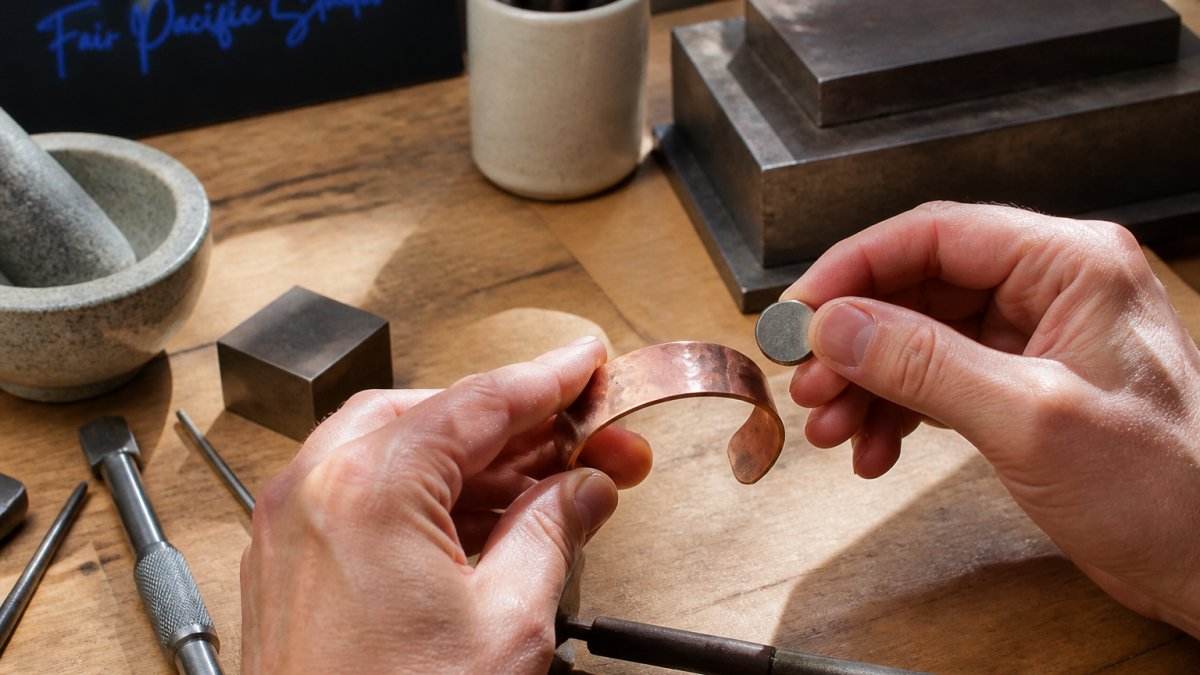
Testing real copper jewelry at home helps confirm authenticity before purchasing or after receiving a piece. Several simple methods can distinguish genuine copper from plated or fake alternatives.
The Magnet Test
Copper is not magnetic. If you hold a magnet near real copper jewelry and the piece is attracted to the magnet, it's either plated over a ferrous metal base or not copper at all. Pure copper and most copper alloys will not respond to a standard magnet.
This test works because the base metals under copper plating, like steel or iron, are magnetic. If the magnet pulls the jewelry toward it, the piece likely has a magnetic core beneath the copper coating. This doesn't make the jewelry worthless, but it confirms the piece is plated rather than solid copper.
The Weight and Feel Method
Real copper has a distinctive weight and density. Solid copper jewelry feels substantial in your hand compared to similarly-sized pieces made from lighter metals. Copper's density is 8.96 grams per cubic centimeter, making it heavier than aluminum or zinc but lighter than sterling silver or gold.
Hold a piece of real copper jewelry and compare it mentally to other metals you've handled. Copper has a solid, grounded feel that reflects its material density. Plated pieces often feel hollow or unexpectedly light because the base metal underneath is typically lighter than solid copper.
Visual Inspection for Authenticity
Examine the piece closely for consistent color and patina development. Real copper jewelry shows uniform coloring throughout, though the color may vary from bright reddish-orange on new pieces to darker browns and blacks as patina forms. Copper-plated jewelry sometimes shows uneven wear, discoloration, or visible base metal at edges, clasps, or high-contact areas.
Look at the clasp, closure, and any areas where metal meets metal. On authentic real copper jewelry, these areas should show the same copper composition as the rest of the piece. If you notice a different color peeking through at joints or edges, the piece is likely plated.
Copper Jewelry Care and Maintenance
Proper care extends the life of real copper jewelry and helps you appreciate how the material develops over time.
Cleaning Methods for Real Copper Pieces
For light cleaning, use a soft cloth and mild soap with warm water. Dry the piece thoroughly afterward. For more stubborn tarnish, a paste made from baking soda and water works well, apply gently with a soft cloth and rinse thoroughly.
Avoid harsh chemical cleaners or abrasive scrubbing, which can damage handcrafted real copper jewelry. If your piece has intricate details or textured surfaces, use a soft-bristled brush to gently work the cleaning paste into crevices. The goal is to remove surface dirt and oxidation without stripping away the natural patina that gives copper its character.
Storage and Protection
Store real copper jewelry in a cool, dry place away from moisture and humidity. Moisture accelerates oxidation and tarnishing. If you live in a humid climate, consider storing your copper pieces in a sealed container with a silica gel packet to absorb excess moisture.
Keep copper jewelry separate from other metals to prevent scratching. Soft cloth pouches or lined boxes work better than open display, which exposes the pieces to air and dust. If you want to preserve the bright, polished appearance of new copper jewelry, store pieces individually wrapped in tarnish-resistant cloth.
Understanding Copper Jewelry Patina and Tarnish
The difference between patina and tarnish is important for understanding how real copper jewelry ages.
What Causes Patina Formation
Patina is the natural oxidation that occurs when copper is exposed to air and moisture over time. This process creates layers of copper oxide, copper carbonate, and other compounds that give the metal a darker, often multicolored appearance. Patina develops gradually and is considered desirable by many people who appreciate handcrafted real copper jewelry.
The colors that emerge during patina formation, ranging from light brown to deep black, sometimes with blues and greens, reflect the specific environmental conditions where the jewelry is worn. A piece worn daily in different environments will develop a unique patina that tells the story of its use.
Preventing and Reversing Tarnish
If you prefer to maintain the bright, polished appearance of new copper jewelry, you can slow tarnish development by keeping pieces dry and storing them properly. A clear protective coating applied by a jeweler can seal the surface and prevent oxidation, though this coating will eventually wear away with regular wear.
To reverse existing tarnish, use the baking soda and water paste method or a specialized copper cleaner. Polish gently with a soft cloth. Some people prefer to embrace the tarnish and patina, allowing the real copper jewelry to develop naturally. Both approaches are valid, it's a matter of personal preference.
Copper Jewelry Benefits and Drawbacks
Understanding both the advantages and limitations of real copper jewelry helps set realistic expectations.
Why People Choose Copper
Copper has been valued in jewelry for thousands of years. The warm, reddish tones complement many skin tones. Real copper jewelry offers an affordable alternative to precious metals while maintaining aesthetic appeal and durability when properly cared for.
Many people are drawn to copper for its natural beauty and the way it develops character over time. The metal doesn't require the same level of maintenance as some precious metals, and the patina that forms is often seen as an enhancement rather than a flaw.
Skin Reactions and Green Discoloration
Some people experience skin reactions to copper, particularly if they have sensitivities to the metal. The most common reaction is green or black discoloration on the skin where the jewelry contacts it.
This reaction is not dangerous, the discoloration washes off with soap and water, but it can be annoying.
Some people develop contact dermatitis from copper, experiencing itching or redness. If this happens, discontinue wearing the piece and consult a dermatologist. For most people, copper jewelry causes no adverse reactions and is perfectly safe to wear regularly.
Where to Buy Authentic Real Copper Jewelry
Finding authentic real copper jewelry means knowing where to look and what questions to ask.
Handmade and Artisan Sources
Artisan makers and handcrafted jewelry studios offer real copper jewelry with transparency about materials and construction. When you buy from an artisan, you're supporting small-batch production and getting pieces created with intention and care. I work with reclaimed copper and natural materials to create jewelry that celebrates the raw beauty of the Pacific Northwest.
Handmade real copper jewelry typically costs more than mass-produced alternatives because of the time and skill involved, but you're paying for quality, uniqueness, and durability. Artisan pieces are often one-of-a-kind or produced in very limited quantities, meaning you're less likely to see someone else wearing an identical piece.
What to Look for in Sellers
Reputable sellers of real copper jewelry are transparent about material composition, provide clear product descriptions, and respond to questions about sourcing and construction.
Check seller reviews and look for patterns in customer feedback. People who buy authentic real copper jewelry often comment on durability, appearance, and how the piece has developed over time.
Ask about return policies and guarantees. Legitimate artisans and retailers stand behind their work. They should be willing to accept returns if a piece doesn't meet your expectations or if there are quality issues.
Choosing real copper jewelry means investing in pieces that will develop character and last for years.
Frequently Asked Questions
How can you tell if jewelry is real copper?
Real copper jewelry has a distinctive reddish-brown color and weight. Test authenticity by checking if it's magnetic (real copper is not), examining the weight relative to size, and looking for maker's marks or purity stamps. Handmade pieces from reputable artisans often come with documentation about material sourcing. If the piece feels too light or shows signs of plating wear, it's likely copper-plated rather than solid copper.
What's the difference between solid copper jewelry and copper-plated?
Solid copper jewelry is made entirely of copper or copper alloys throughout, while copper-plated jewelry has a thin layer of copper bonded to a base metal underneath. Solid copper is more durable and develops a natural patina over time. Copper-plated pieces eventually wear through, exposing the base metal and potentially causing skin reactions. Solid copper jewelry lasts longer and maintains its authenticity even as it ages.
Does real copper jewelry turn your skin green?
Genuine copper can cause green discoloration on skin due to oxidation, especially in humid conditions or with moisture. This is not harmful but can be prevented by applying a clear protective coating to the piece or wearing a barrier like a thin cloth between the jewelry and your skin. Some people experience this more than others depending on their skin's pH and moisture levels. Sealed or enameled copper pieces minimize this effect.
How do you clean and care for copper jewelry?
Clean real copper jewelry with a soft cloth and mild soap and water, or use a specialized copper cleaner for stubborn tarnish. Avoid harsh chemicals that can damage the patina or any protective coating. Store pieces in a dry place, away from moisture and air exposure. For handmade copper jewelry, check with the maker for specific care instructions, as some pieces may have special finishes or treatments that require gentle handling.