
Table of Contents
- Identify Your Recycled Brass Before Cleaning
- How to Clean Brass Jewelry with Gentle Methods
- How to Remove Tarnish from Brass Jewelry Without Damage
- How to Clean Brass Jewelry That Turns Green
- Choosing the Right Brass Jewelry Cleaning Cloth
- Methods to Avoid and When to Stop Cleaning
- Long-Term Care and Storage for Recycled Brass
- Frequently Asked Questions
Last Updated: October 21, 2026
Identify Your Recycled Brass Before Cleaning
Before I reach for a cleaning cloth or solution, I need to know exactly what I'm working with. Clean recycled brass jewelry comes in different forms, and each one requires a different approach. Getting this wrong can damage a piece permanently.
The material underneath matters most. Is it solid brass all the way through, or is it plated? Does it have a protective coating? I need to answer these questions first.
Solid Brass vs. Brass-Plated and Lacquered Pieces
Solid brass is brass throughout the entire piece. It's durable and can handle more aggressive cleaning if needed.
Brass-plated jewelry has a thin layer of brass bonded to another metal base, usually copper or steel. The plating is delicate. Scrubbing too hard or using harsh chemicals can wear through the plating and expose the base metal underneath.
Lacquered brass has a clear protective coating on top. This coating prevents tarnish and keeps the brass looking shiny. If I clean lacquered brass with abrasive methods, I'll scratch or remove the lacquer, and the brass underneath will start to tarnish immediately.
I can tell the difference by looking closely. Solid brass feels uniform in color and weight. Plated pieces sometimes show wear at the edges or clasp areas where the plating has rubbed away.
Safety Check for Stones, Pearls, and Adhesives
Some recycled brass jewelry pieces include stones, pearls, or other delicate materials. I need to check for these before cleaning.
Stones and pearls can be damaged by water, soap, or cleaning solutions. Pearls are especially fragile. They can lose their luster or even crack if soaked. Soft stones like turquoise or opal are porous and absorb water, which can cause discoloration or cracking over time.
Adhesives hold many pieces together. Heat, water, and certain chemicals can weaken the glue. If a stone is glued into place, aggressive cleaning could loosen it.
I look for these warning signs:
- Stones that feel loose or rattle slightly
- Visible glue around stone settings
- Pearls with any visible cracks or damage
- Pieces that feel fragile or delicate
If I find any of these, I skip the water-based cleaning methods and stick to dry polishing with a soft cloth instead.
How to Clean Brass Jewelry with Gentle Methods
Most clean recycled brass jewelry responds well to simple, gentle cleaning. I don't need expensive products or complicated techniques. A soft cloth and mild soap in warm water work for many pieces.
Soft Cloth and Mild Soap Approach
The gentlest way to clean brass is with a microfiber polishing cloth or soft cotton cloth. These cloths are designed not to scratch the surface.
Microfiber cloths work especially well because they lift tarnish and oils without requiring any liquid. I just rub the brass gently in circular motions. This method is safe for plated brass and lacquered pieces because there's no water or chemicals involved.
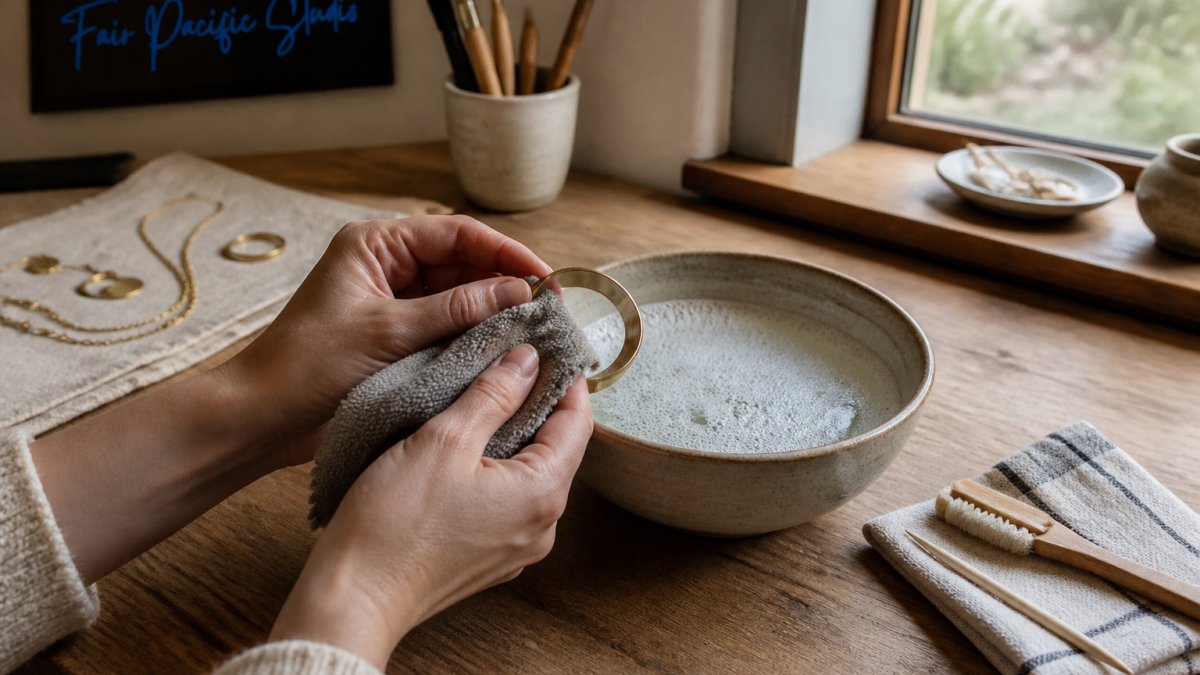
For pieces that need more cleaning power, I use mild dish soap and warm water. I avoid hot water because extreme temperatures can damage adhesives and weaken plating. Lukewarm water is the right choice.
Step-by-Step Cleaning Process
I follow this process for safe, effective cleaning:
-
Gather supplies, Get a soft cloth (microfiber or cotton), mild dish soap, warm water, and a small bowl.
-
Prepare the water, Fill the bowl with lukewarm water. Add just a drop or two of mild dish soap. The water should feel slightly slippery but not soapy.
-
Dip the cloth, Wet the cloth in the soapy water and wring it out well. The cloth should be damp, not dripping wet.
-
Wipe the jewelry, Gently rub the brass piece with the damp cloth, using circular motions. Work slowly and pay attention to crevices and details.
-
Rinse with clean water, Use a fresh cloth dampened with plain warm water to wipe away any soap residue.
-
Dry immediately, Use a dry cloth to remove all moisture. Water left on brass can cause spotting or new tarnish to form quickly.
-
Buff for shine, Use a dry microfiber cloth to buff the piece gently. This brings out the natural shine.
This process takes about five minutes per piece. I don't rush it. The slower I go, the better the results and the less risk of damage.
How to Remove Tarnish from Brass Jewelry Without Damage
Tarnish is a natural oxidation layer that forms on brass over time. It looks like a dark film or discoloration. I can remove it safely with the right method.
Natural Household Methods
I have several options using items I already have at home. These methods are safe for solid brass but require caution with plated or lacquered pieces.
Vinegar and salt method works well for solid brass. I mix equal parts white vinegar and salt to make a paste. I apply the paste to the tarnished area with a soft cloth and rub gently in circular motions.
Lemon and salt method is gentler than vinegar. I cut a lemon in half and dip it in salt. I use the lemon to rub the tarnished brass gently.
Baking soda paste is the gentlest chemical method. I mix baking soda with just enough water to form a thick paste.
These natural methods take longer than commercial products, but they're safer and I know exactly what's on my jewelry.
Using a Brass Cleaner or Polishing Product
Commercial brass cleaners are formulated specifically for brass and work quickly. I choose products labeled as safe for jewelry and avoid anything too abrasive.
When I use a commercial cleaner, I follow the instructions carefully. Most require me to apply the product to a soft cloth, not directly to the jewelry. I rub gently and avoid letting the product sit too long on plated or lacquered pieces.
I test any new product on a small, hidden area first. This helps me see how the product affects the specific piece before I clean the whole thing.
How to Clean Brass Jewelry That Turns Green
Green discoloration on brass is copper oxide. It happens when brass (which contains copper) reacts with moisture and air. It also happens when brass touches skin.
Understanding Green Discoloration and Skin Acidity
Brass turns green because of skin chemistry. Everyone's skin is slightly acidic, and that acidity reacts with the copper in brass. The reaction creates a green or blue-green film on the skin and sometimes on the jewelry itself.
This is harmless. The green discoloration won't hurt me, and it doesn't mean the jewelry is low quality. It's simply a natural reaction between the metal and skin.
Some people experience this more than others. People with more acidic skin chemistry see green marks faster. Moisture, humidity, and sweat also speed up the process.
Cleaning and Prevention Steps
To remove green discoloration, I use the same gentle methods I described earlier. The vinegar and salt paste works especially well for green tarnish because the acid cuts through the oxidation quickly.
After cleaning, I can prevent the green from coming back as fast:
- Dry the jewelry after wearing it, especially if I've been sweating
- Store it in a dry place, not in a humid bathroom
- Apply a thin coat of clear nail polish or clear lacquer to the underside of the piece (the side that touches my skin)
- Take the jewelry off before showering or swimming
- Wipe the jewelry with a dry cloth periodically while wearing it
These steps reduce the reaction between my skin and the brass, so the green takes longer to appear.
Choosing the Right Brass Jewelry Cleaning Cloth
The cloth I use matters as much as the cleaning method. The wrong cloth can scratch or damage the finish.
Microfiber cloths are my top choice. They're soft, lint-free, and designed specifically for polishing. I can find them at most stores, and they last for years with proper care.
Cotton flannel works well too. It's soft and gentle. I avoid regular cotton t-shirt material because it can be too rough.
I never use paper towels, tissues, or regular cloths. These materials have fibers that can scratch brass, especially if the brass is plated or has a delicate finish.
I wash my polishing cloths regularly with mild soap and water. I air-dry them to keep them soft. A clean cloth works better and prevents transferring old tarnish or dirt to a freshly cleaned piece.
Methods to Avoid and When to Stop Cleaning
Some cleaning methods damage brass jewelry. I avoid these completely.
Toothpaste is too abrasive, even "gentle" formulas. It's designed to scrub teeth, not delicate metal. It will scratch plated brass and can dull the finish on solid brass.
Ammonia and harsh chemicals strip protective coatings and can damage adhesives. I stay away from window cleaner, bleach, and strong degreasers.
Prolonged soaking weakens adhesives and can cause water damage to stones or pearls. I never soak jewelry for more than a few minutes.
Ultrasonic cleaners are too aggressive for recycled jewelry with stones, pearls, or delicate settings. They can loosen stones or damage the piece.
I know to stop cleaning when:
- The piece feels fragile or delicate
- I see visible damage or loose parts
- The finish starts to look dull or worn after cleaning
- A stone feels loose or sounds like it's moving inside the setting
If any of these happen, I stop and consider taking the piece to a professional jeweler. Continuing to clean can make the damage worse.
Long-Term Care and Storage for Recycled Brass
How I store and wear recycled brass jewelry affects how long it lasts and how often it needs cleaning.
I store pieces in a cool, dry place. A drawer or closet works better than a bathroom because bathrooms are humid. Humidity speeds up tarnish formation.
I keep each piece separate if possible. Jewelry stored together can scratch each other. Small pouches or individual compartments in a jewelry box work well.
I avoid storing brass jewelry in plastic bags or airtight containers for long periods. These can trap moisture and speed up tarnishing.
I wear the pieces regularly if I can.
I wipe pieces with a dry cloth after wearing them, especially if I've been sweating or in humid conditions.
I have the pieces professionally cleaned or repaired if they show signs of damage.
Taking care of recycled brass jewelry doesn't require complicated methods or expensive products.
Frequently Asked Questions
Can you clean brass jewelry with soap and water?
Yes. Mild soap and lukewarm water are safe for most solid brass jewelry. Mix a few drops of gentle dish soap with water, dip a soft cloth into the solution, and gently wipe the piece. Rinse thoroughly with clean water and dry immediately with a soft cloth. Avoid soaking for extended periods, as prolonged water exposure can damage plating or adhesives holding stones in place.
How do you remove tarnish from brass jewelry without scratching it?
Use a soft polishing cloth or microfiber cloth designed for brass jewelry, these remove light tarnish without abrasion. For heavier tarnish, try a paste of baking soda and water, applied gently with a soft cloth in circular motions. Test on a small, inconspicuous area first. Avoid abrasive toothpaste or steel wool, which scratch the surface. For plated or delicate pieces, consult a jeweler rather than risk damage.
How do you clean recycled brass jewelry safely?
Start by identifying whether your piece is solid brass, plated, or lacquered, each requires different care. Check for stones, pearls, or adhesives that could be damaged by moisture. Clean with a soft cloth and mild soap and water, or use natural methods like baking soda paste for tarnish. Dry immediately and store in a dry place. Avoid abrasive cleaners, strong acids, ammonia, and prolonged soaking. If your piece has delicate finishes or attached stones, hand-clean gently or seek professional cleaning.
What causes green discoloration on brass jewelry, and how do I prevent it?
Green discoloration occurs when brass reacts with skin acidity, moisture, and air, a natural patina that forms on recycled brass over time. To prevent it, remove your jewelry before showering or swimming, dry it immediately after wear, and store it in a dry environment. Applying a thin coat of clear jewelry lacquer can seal the surface. If green residue appears on your skin, wash the area with soap and water. The discoloration is not harmful but can be minimized with proper care and storage.