
Table of Contents
- What Recycled Brass Jewelry Actually Is
- Does Brass Jewelry Tarnish? What You Need to Know
- Durability and Everyday Wear
- Brass Jewelry Care and Maintenance
- Recycled Brass vs. New Brass: What's the Real Difference
- Brass Jewelry and Skin Irritation: What You Should Know
- Total Cost of Ownership: Beyond the Price Tag
- Is Recycled Brass Jewelry Worth It for You?
- Frequently Asked Questions
Last Updated: October 18, 2026
What Recycled Brass Jewelry Actually Is
Recycled brass jewelry is made from brass that has been recovered, melted down, and reformed into new pieces rather than created from virgin materials.
Brass is an alloy of copper and zinc. Recycling keeps its composition stable, so recycled brass performs identically to new brass in durability, tarnishing, and strength. The real distinction is where the material originated and how much energy it took to produce.
How recycled brass differs from new brass
New brass requires mining and refining copper and zinc ore. Recycled brass skips those steps: manufacturers collect scrap brass, melt it, and recast it.
Buying recycled brass jewelry supports a circular economy where materials get a second life rather than becoming waste.
One practical consideration: recycled brass may contain trace metals from its previous use. Reputable manufacturers test for contaminants, particularly nickel, which can trigger skin reactions in sensitive individuals.
Verifying recycled content claims
Not every piece labeled "recycled brass" actually contains recycled material. Some manufacturers use the term loosely or apply it to only a portion of the piece.
Transparent makers document their sourcing and can tell you whether the brass came from post-consumer scrap (jewelry, household items) or post-industrial waste (manufacturing offcuts).
Ask direct questions before purchasing. Fair Pacific Studio's handcrafted approach means each piece can be discussed individually.
Does Brass Jewelry Tarnish? What You Need to Know
Yes, brass jewelry tarnishes. It's not a defect but natural oxidation from oxygen and moisture, creating a darker, sometimes greenish patina. Some people love the aged look on handcrafted pieces; others see it as a maintenance burden.
The tarnishing process is identical whether your brass is recycled or new, but how quickly it happens affects long-term satisfaction.
Why tarnishing happens and what it means
Tarnishing occurs because brass is reactive: the copper oxidizes into copper oxide, which builds into a visible layer. Humidity, salt water, and air pollution accelerate it.
Tarnishing doesn't damage the brass itself. The metal underneath remains structurally sound, so the change is purely cosmetic.
Timelines vary: some pieces tarnish within weeks, others take months, depending on alloy composition, thickness, local humidity, and wear frequency.
Recycled versus new brass: tarnishing differences
Recycled brass tarnishes at the same rate as new brass because the oxidation chemistry and composition are identical. Post-consumer brass may have microscopic surface variations, but the practical difference is negligible.
Manufacturing quality matters more: well-made pieces with proper surface preparation tarnish more slowly, while rough surfaces accelerate the process. This applies equally to recycled and new brass.
Durability and Everyday Wear
Brass is reasonably durable for jewelry, though softer than gold or sterling silver. It handles daily wear if you're mindful of impact and scratching, but shows visible wear over time if you're rough with it.
For everyday wear, thickness matters: thin chains and small connectors bend or break more easily than substantial pieces. Handcrafted jewelry often features intentional thickness and structural integrity designed for regular use.
Strength of brass alloys for daily use
Most jewelry-grade brass contains 60-70% copper and 30-40% zinc, balancing workability with structural strength. That's strong enough for bracelets, necklaces, and rings worn in normal daily conditions.
Brass is harder than pure copper but softer than sterling silver, so it resists denting better than copper but scratches more easily than silver. If you work with your hands or play contact sports, it will show wear faster.
Long-term performance expectations
Brass jewelry typically lasts 5-10 years with moderate daily wear before structural issues emerge: clasps loosen, solder joints weaken, and repeated bending causes failure. This lifespan applies to recycled and new brass equally.
Craftsmanship dramatically affects durability. Handcrafted jewelry with proper joinery and secure clasps lasts longer than mass-produced alternatives.
| Wear Level | Expected Lifespan | Best For |
|---|---|---|
| Light (occasional wear) | 10-15 years | Special occasion pieces |
| Moderate (2-3 times weekly) | 5-10 years | Everyday rotation pieces |
| Heavy (daily wear, active lifestyle) | 2-5 years | Fashion pieces, accepting visible wear |
Brass Jewelry Care and Maintenance
Caring for brass jewelry is straightforward but requires consistency to minimize tarnishing.
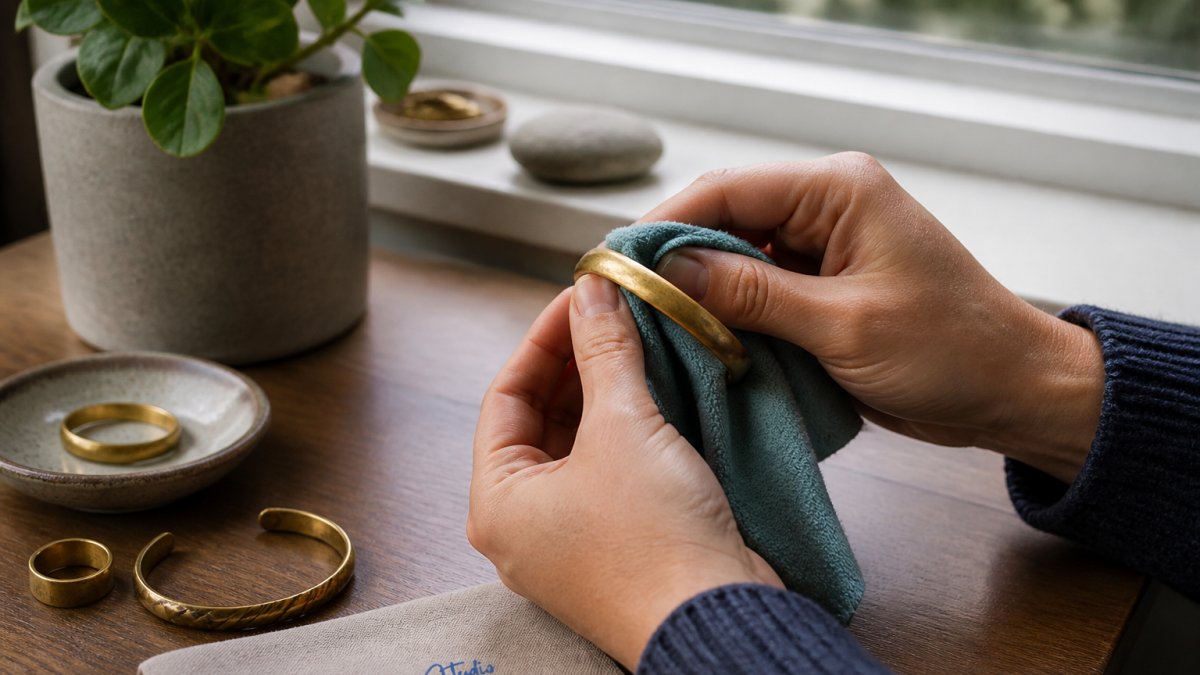
Most tarnish can be removed with gentle cleaning at home, as long as your method doesn't damage the metal, design details, patina, or stone settings.
Cleaning methods and frequency
For light tarnish, a soft microfiber cloth and gentle circular rubbing removes oxidation within minutes.
For heavier tarnish, mix equal parts baking soda and lemon juice into a paste, apply with a soft cloth, rub gently, and rinse thoroughly.
Commercial brass cleaners are unnecessary for routine care and often harsh. Save them for severe tarnish.
Clean brass jewelry every 2-4 weeks if you wear it regularly to prevent heavy buildup.
Storage and protection tips
How you store brass jewelry between wears significantly affects tarnishing speed. Air exposure and humidity are the main culprits.
Individual cloth pouches or small boxes work well. Avoid plastic bags unless they're specifically anti-tarnish bags, as regular plastic can trap moisture.
Keep brass jewelry away from perfume, lotions, and cleaning products. These substances can accelerate tarnishing or damage finishes. Apply perfume and skincare before putting on your jewelry, not after.
Recycled Brass vs. New Brass: What's the Real Difference
The functional difference between recycled brass and new brass is negligible. Both tarnish identically, both have the same durability, and both require the same maintenance. The meaningful difference lies in sourcing and environmental impact.
New brass requires active mining of copper and zinc ore, which consumes energy, disturbs land, and generates mining waste. Recycled brass requires melting and recasting, which also consumes energy but avoids the extraction phase entirely.
Environmental impact comparison
From a lifecycle perspective, recycled brass has a lower environmental footprint than new brass. The mining phase, often the most resource-intensive part of brass production, is eliminated.
However, recycling isn't carbon-free. The melting and recasting process still requires energy, typically from the electrical grid. The environmental benefit depends partly on your region's energy sources.
Recycled brass also keeps material out of landfills. Brass scrap has value and gets recovered, rather than discarded.
Performance and longevity
Recycled brass performs identically to new brass in terms of durability, tarnishing, strength, and wearability. A piece made from recycled brass will last just as long and require the same maintenance as a piece made from new brass.
The quality of the piece matters far more than whether the brass is recycled or new. A well-crafted recycled brass piece will outperform a poorly made new brass piece every time.
Brass Jewelry and Skin Irritation: What You Should Know
Some people experience skin irritation from brass jewelry. The culprit is usually nickel, a metal often present in brass alloys. Nickel sensitivity is one of the most common metal allergies, affecting roughly 10-15% of the population.
Not all brass contains problematic nickel levels. High-quality brass uses precise alloy ratios that minimize nickel. Cheap brass may contain higher nickel percentages or inconsistent composition, increasing irritation risk.
Nickel content and metal sensitivity
Brass alloys typically contain small amounts of nickel as a byproduct of zinc refining. The nickel concentration varies by manufacturer and alloy type.
Symptoms of nickel irritation include redness, itching, or a rash where the jewelry contacts skin. Reactions typically develop within hours to days of wearing the piece.
Testing your sensitivity is straightforward: wear a brass piece for 24 hours and observe for any reaction. If you have no symptoms, you likely tolerate brass fine.
How recycled brass compares to other metals
Recycled brass has the same nickel content as new brass, recycling doesn't change the alloy composition. If nickel is a concern for you, the recycled versus new distinction doesn't matter. What matters is the specific alloy.
Sterling silver is a better choice if you have nickel sensitivity. Pure silver contains no nickel and rarely causes irritation. Gold is also safe for most people, though nickel-containing gold alloys exist.
Recycled copper offers another alternative. Pure copper rarely causes irritation, though it does tarnish heavily and requires more maintenance than brass. Recycled copper jewelry carries the same safety profile as new copper, no nickel issues, but more tarnishing.
Total Cost of Ownership: Beyond the Price Tag
Evaluating whether recycled brass jewelry is worth buying requires looking beyond the initial purchase price. Total cost of ownership includes maintenance costs, potential repairs, and how long the piece actually lasts before you stop wearing it.
Brass jewelry requires regular cleaning and occasional maintenance. While these tasks are inexpensive, baking soda, soft cloths, and your time, they do represent ongoing investment.
Maintenance costs and replacement frequency
Annual maintenance costs for brass jewelry are minimal if you do it yourself. A microfiber cloth costs a few dollars and lasts years. Baking soda costs pennies.
If you prefer professional cleaning, expect to pay $15-30 per piece per cleaning. For someone wearing brass jewelry regularly, this could add up to $50-100 annually.
Replacement frequency depends on wear intensity. Lightly worn pieces can last 10-15 years. Heavily worn pieces might need replacement within 5 years.
Value retention and resale potential
Brass jewelry has limited resale value. Unlike precious metals priced by weight and purity, brass has no established secondary market.
This matters if you're viewing jewelry as an investment or hedge. Brass is not that. It's a consumable item with aesthetic and personal value but limited financial resale potential.
Handcrafted pieces have slightly better resale prospects than mass-produced alternatives because uniqueness and artisan quality appeal to specific buyers.
Is Recycled Brass Jewelry Worth It for You?
Whether recycled brass jewelry is worth buying depends on your priorities, budget, and expectations. It's not universally the right choice, but it's absolutely right for specific situations.
When recycled brass makes sense
Recycled brass jewelry makes sense if you value sustainability and are willing to accept the maintenance requirements that come with brass.
I recommend recycled brass if you're building a jewelry collection on a budget and want pieces you can wear frequently without worrying about damage.
Recycled brass also makes sense if nickel sensitivity isn't a concern for you and you're drawn to the circular economy philosophy.
When other metals might be better
If you have nickel sensitivity, sterling silver or gold-plated options are safer choices.
If you work with your hands or lead an active lifestyle with frequent impact, consider metals stronger than brass. Sterling silver and stainless steel handle rough wear better.
If you want a truly low-maintenance piece, avoid brass entirely. Accept that brass requires care, or choose metals that age more gracefully without visible tarnishing.
Frequently Asked Questions
Does recycled brass jewelry tarnish like new brass?
Yes, recycled brass jewelry tarnishes the same way new brass does because the alloy composition is identical. Tarnishing is a natural oxidation process that occurs when brass reacts with oxygen and moisture in the air. The recycled source doesn't affect how quickly or severely tarnishing develops. Regular cleaning and proper storage can slow the process, but some patina development is normal and expected with brass jewelry over time.
How can you tell if brass jewelry is actually recycled?
Authentic recycled brass jewelry should come with documentation or transparency from the maker about its sourcing. Ask makers directly whether they use recycled or new brass, and request information about their sourcing practices. Be cautious of sellers who make recycled claims without supporting information. Recycled brass itself looks identical to new brass, so visual inspection alone cannot confirm recycled content.
Can recycled brass jewelry cause skin irritation?
Skin irritation from brass jewelry typically stems from nickel content in the alloy, not whether the brass is recycled or new. Some people have metal sensitivity or nickel allergies that trigger reactions. If you have sensitive skin, ask makers about their specific alloy composition and nickel content before purchasing.
Is recycled brass jewelry worth buying compared to sterling silver or stainless steel?
Recycled brass jewelry offers unique advantages: it's more affordable than recycled silver or gold, develops character through patina, and supports circular economy principles. However, it requires more maintenance than stainless steel and tarnishes faster than sterling silver. The choice depends on your priorities. If you value affordability, aesthetic appeal, and sustainability, recycled brass excels. If durability and minimal maintenance matter most, stainless steel or sterling silver might serve you better long-term.