
Table of Contents
- Start with a Strong Anchor Piece
- Necklace Layering Lengths: The Foundation of Balance
- How to Layer Necklaces Without Tangling
- How Many Necklaces to Layer for a Minimalist Look
- Minimalist Necklace Layering Ideas: Styling for Everyday Wear
- Storage and Maintenance for Layered Jewelry Sets
- Common Mistakes to Avoid When Layering Necklaces
- Frequently Asked Questions
Last Updated: October 7, 2026
Start with a Strong Anchor Piece
The foundation of any successful how to layer necklaces for minimalist style begins with choosing the right anchor piece.
An anchor piece is typically a delicate chain with a small pendant or a simple solitaire. It sits closest to your skin and serves as the visual starting point.
Here's why this matters: a strong anchor piece prevents your layered necklaces from feeling chaotic.
When selecting your anchor, consider these qualities:
- Length: Sits at 16-18 inches, resting at your collarbone
- Metal tone: Choose one primary metal (gold, silver, or copper) to anchor the look
- Pendant style: Keep it understated, a small charm, birthstone, or geometric shape works best
- Chain weight: Delicate but sturdy enough to hold the weight of additional layers
At Fair Pacific Studio, I design anchor pieces using reclaimed copper, sterling silver, and natural stones. Each piece is handcrafted to balance durability with that refined, minimalist aesthetic.
The anchor piece is where most people get stuck. They overthink it. But here's the truth: your anchor doesn't need to be complicated.
Necklace Layering Lengths: The Foundation of Balance
The secret to successful necklace layering lengths is creating visual separation between each chain.
Here are the standard lengths that work for layering:
- Choker (14-16 inches): Sits at the base of your neck
- Princess (18-20 inches): Rests at your collarbone
- Matinee (20-24 inches): Falls mid-chest
- Opera (28-34 inches): Reaches toward your sternum
The key principle: each layer should be visibly distinct from the others. If two necklaces sit at almost the same length, they'll tangle and compete for visual space.
For a minimalist approach, I recommend using no more than three layers. Pick lengths that create clear visual breaks, for example, a 16-inch choker, a 20-inch princess, and a 24-inch matinee.
A practical tip: lay your necklaces flat on a table before wearing them together. This shows you exactly how they'll sit and whether the lengths work in harmony.
Consider your neckline too. A high crew neck works best with shorter layers. A V-neck or scoop neck gives you more room to play with longer pieces.
How to Layer Necklaces Without Tangling
Tangling is the number-one complaint people have about layered necklaces. The good news: it's preventable with the right approach.
How to Layer Necklaces Without Tangling
True Curated Designs
Choose the Right Chain Weights and Textures
Different chain weights behave differently when layered. A delicate, thin chain tangles more easily than a heavier one because it moves around and catches on other chains.
Here's what works best:
- Delicate chains: Use for your anchor piece only. These are your statement-makers but they need support.
- Medium-weight chains: Perfect for middle layers. They have enough substance to stay in place without feeling heavy.
- Textured chains: Rope chains, cable chains, and twisted designs grip each other less than smooth chains. They're tangle-resistant.
The texture matters more than you'd think. A smooth, polished chain slides against other chains and knots easily. A textured chain with visual interest (like a rope or braided design) has more grip and stays put.
At Fair Pacific Studio, I craft chains with varying textures specifically for layering. The reclaimed copper pieces have a naturally oxidized finish that provides grip, while my sterling silver chains come in both smooth and textured options.
Mix your metals intentionally. If you're using gold vermeil, sterling silver, and reclaimed copper together, choose one metal for your anchor and let the others support it.
Use a Layering Clasp for Stability
A layering clasp is a game-changer. This is a specially designed clasp that holds multiple chains in place at the back of your neck, preventing them from sliding around.
Here's how it works: instead of fastening each necklace separately, you attach all your chains to one central clasp point. This eliminates the movement that causes tangling. Each chain stays exactly where you positioned it.
When shopping for layering clasps, look for these features:
- Multiple connection points: At least 2-3 loops to accommodate different chain weights
- Secure fastening: A sturdy clasp mechanism that won't pop open
- Low profile: You won't see it under your hair, so it should be small and discreet
The clasp sits at the back of your neck, hidden beneath your hair. From the front, viewers see only the cascading layers. This is what makes the look feel effortless and intentional.
If you don't have a dedicated layering clasp, you can create a similar effect by using small jump rings. Attach all your chains to one jump ring, then fasten that ring to your neck.
How Many Necklaces to Layer for a Minimalist Look
This is where minimalism and personal preference intersect. There's no single "right" answer, but there are guidelines that help you avoid looking cluttered.
For a true minimalist aesthetic, I recommend starting with two necklaces. This gives you visual interest without overwhelming your look. It's the sweet spot between intentional layering and restraint.
Three necklaces work beautifully if you've chosen the right lengths and metals. This is the maximum I'd recommend for everyday minimalist styling. Beyond three, you risk tipping into maximalist territory.
Here's how to decide:
- Two layers: Best for work, casual outings, or when you want understated elegance
- Three layers: Works for special occasions or when you're wearing a simple outfit that can handle more visual interest
- Four or more: This moves into maximalist territory and requires careful styling to avoid looking chaotic
The quality of each piece matters more than quantity. One beautiful, handcrafted necklace beats three cheap chains. In minimalism, restraint is the point.
Consider your outfit too. A simple white t-shirt can handle three delicate layers. A patterned dress or busy top? Stick with two.
Minimalist Necklace Layering Ideas: Styling for Everyday Wear
Minimalist necklace layering isn't about following rigid rules. It's about creating a look that feels intentional and reflects your personal style while maintaining visual clarity.
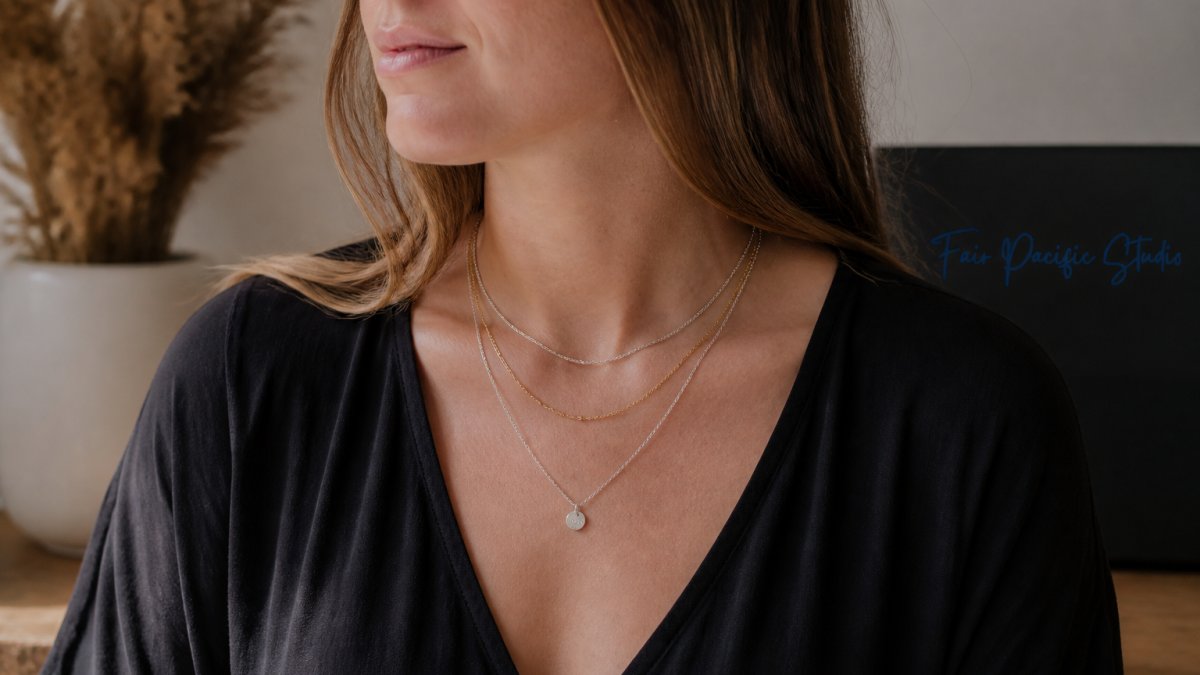
Here are some everyday combinations that work:
- The Classic: A 16-inch silver choker with a small pendant, paired with an 20-inch silver princess chain
- The Warm Metals: A 18-inch gold vermeil chain with a solitaire, layered with a 24-inch copper rope chain
- The Mixed: A 16-inch delicate sterling silver chain, a 20-inch textured brass chain, and a 24-inch smooth copper chain
- The Minimalist: Just one longer chain worn alone, or two chains of very different lengths for maximum visual separation
The key is consistency. If you're mixing metals, make sure they're intentional pairings. Gold and copper work well together. Silver and brass create a cool, modern vibe. Mixing all three requires a confident hand.
Neckline-Specific Layering Strategies
Your neckline determines how your layered necklaces will sit and look. Different necklines call for different layering approaches.
Crew necks and high necklines: These leave minimal space for necklaces. Stick with shorter layers, choker and princess lengths work best.
V-necks and scoop necks: These are ideal for layering. You have room to showcase multiple lengths. A choker, princess, and matinee combination works beautifully here.
Boat necks and off-shoulder styles: These expose your collarbones and shoulders, giving you the most flexibility. You can layer longer pieces here without them getting lost.
Turtlenecks: Avoid layering with turtlenecks entirely. The neckline competes with your necklaces. If you love layering, choose a different top.
The principle is simple: more exposed neckline means more room for layering. Less exposed neckline means shorter, more delicate pieces.
Mixing Metal Tones and Textures
Metal consistency matters in minimalist styling, but mixing metals can work beautifully if you're intentional about it.
Here's the rule: choose one primary metal and let the others support it. If silver is your anchor, copper and brass become accents. This creates hierarchy and prevents a "costume jewelry" feel.
Texture adds visual interest without adding visual weight. A smooth chain next to a textured one creates contrast that feels sophisticated.
Avoid mixing too many finishes. Shiny gold, matte copper, and polished silver together can feel chaotic.
The beauty of handcrafted pieces from Fair Pacific Studio is that each metal tells a story. Reclaimed copper has character and history. Sterling silver carries elegance. Brass brings warmth.
Storage and Maintenance for Layered Jewelry Sets
Once you've invested in beautiful layered necklaces, you need to protect them. Proper storage prevents tangling, tarnishing, and damage.
Here's what works best:
- Separate storage: Keep each necklace in its own small pouch or compartment. This prevents tangling and protects delicate chains from scratching.
- Avoid humidity: Store jewelry in a cool, dry place. Moisture causes tarnish, especially on sterling silver and reclaimed copper.
- Avoid direct sunlight: UV light can fade stones and fade the patina on copper pieces.
- Use anti-tarnish strips: For sterling silver, place an anti-tarnish strip in your storage container. These absorb the elements that cause tarnishing.
For layered sets that you wear together regularly, consider storing them together on a jewelry stand or display. This keeps them organized and reminds you of combinations that work.
Cleaning your necklaces regularly keeps them looking fresh. Use a soft cloth to gently wipe each piece. For deeper cleaning, use a specialized jewelry cleaner appropriate for your metal type. Reclaimed copper can develop a natural patina over time, this is part of its charm, but you can clean it if you prefer a brighter finish.
Common Mistakes to Avoid When Layering Necklaces
Understanding what doesn't work helps you avoid frustration. Here are the mistakes I see most often:
Mistake 1: Choosing similar lengths. If your necklaces sit at almost the same point on your body, they'll tangle and compete visually. Always aim for clear separation.
Mistake 2: Mixing too many styles. A delicate minimalist chain next to a chunky statement pendant creates visual confusion. Stick with a cohesive aesthetic.
Mistake 3: Ignoring your neckline. Layering with a high crew neck or turtleneck doesn't work. Your neckline and your layering strategy need to align.
Mistake 4: Overloading with metals. More than two or three different metal tones starts to feel costume-like. Restraint is the minimalist principle.
Mistake 5: Skipping the clasp. Without a layering clasp or secure fastening point, your necklaces will shift and tangle throughout the day. This single investment solves most tangling problems.
Mistake 6: Choosing low-quality chains. Cheap chains break easily and don't hold their shape. Invest in well-made pieces that will last.
Frequently Asked Questions
How many necklaces should you wear for a minimalist layered look?
Two to three necklaces create a balanced minimalist aesthetic. Start with an anchor piece, your longest necklace, then add one or two shorter chains. More than three can feel cluttered and defeats the minimalist principle. The key is restraint: each piece should be visible and intentional, not competing for attention. Layer fewer pieces if you prefer an understated aesthetic.
How do you layer necklaces without them tangling?
Choose chains with different weights and textures to prevent friction and movement. A delicate base chain paired with a slightly heavier pendant creates natural separation. Use a layering clasp designed specifically for stacking, which keeps each necklace in its own space. Store layered pieces flat in individual compartments or wrapped separately. Avoid mixing chains of identical gauge, as they tangle more easily.
What necklace lengths work best for layering?
A classic minimalist stack uses three lengths: a choker or princess length (16-18 inches) as your shortest piece, a matinee length (20-24 inches) in the middle, and an opera or longer length (28-36 inches) as your anchor. This spacing ensures each necklace sits at a distinct point on your body, creating visual interest without overlap. Adjust based on your neckline and personal proportions.
Can you mix metals when layering necklaces?
Yes, mixing metals can be a beautiful part of minimalist styling. Combine sterling silver, gold vermeil, and reclaimed copper for depth and visual interest. The key is consistency in tone, pair warm metals (gold, copper) together or cool metals (silver) together, or intentionally contrast them for a deliberate aesthetic. Ensure all metals are tarnish-resistant or regularly maintained to keep your layered look polished.
Building a minimalist necklace layering practice takes intention, but the payoff is worth it. You'll develop a signature look that feels uniquely yours. Start with a strong anchor piece, add layers thoughtfully, and invest in quality chains that will last. I recommend exploring Fair Pacific Studio's collection of handcrafted necklaces, each piece is designed for layering and built to last. Shop the catalog and discover how beautifully minimalist layering can transform your everyday style.