
Last Updated: October 25, 2026
Quick Summary
Sustainable fabrics are materials produced with minimal environmental impact, including natural fibers grown without synthetic pesticides, recycled materials that divert landfill waste, and regenerated fibers from renewable cellulose. For beginners, organic cotton, linen, and regenerated fibers like TENCEL offer practical entry points that balance environmental benefit with availability and performance.
- Organic cotton eliminates synthetic pesticides and uses less water than conventional cotton but costs more.
- Hemp grows quickly, needs almost no pesticides, and improves soil quality, though availability remains limited.
- Regenerated fibers like TENCEL use a closed-loop production process where solvents are recycled and reused.
- Certifications cover different parts of the supply chain: fiber-level, processing-level, or chain-of-custody verification.
- Durability is the most important sustainability metric; a garment lasting a decade beats one that falls apart after one season.
Table of Contents
- What Are Sustainable Fabrics?
- Natural Fibers: Cotton, Linen, Hemp, and Silk
- Recycled and Regenerated Fibers
- Types of Sustainable Fabrics and Their Trade-Offs
- Sustainable Fabric Certifications You Should Know
- Sustainable Fabric for Sewing: Choosing the Right Material
- How to Choose Sustainable Fabric: A Practical Framework
- Care, Repair, and End-of-Life: Making Your Fabrics Last
- Frequently Asked Questions
What Are Sustainable Fabrics?
Sustainable fabrics are materials produced with minimal environmental impact, preserving natural resources and reducing waste throughout the supply chain. The term covers natural fibers grown without synthetic pesticides, recycled materials that divert landfill waste, and regenerated fibers from renewable cellulose.
I focus on sustainable fabrics because material choices directly influence how long garments last and what happens to them afterward.
Natural Fibers: Cotton, Linen, Hemp, and Silk
Natural fibers come directly from plants or animals, requiring no synthetic transformation. They're biodegradable and often breathable, but natural doesn't automatically mean sustainable, growing practices matter enormously.
Organic Cotton vs. Conventional Cotton
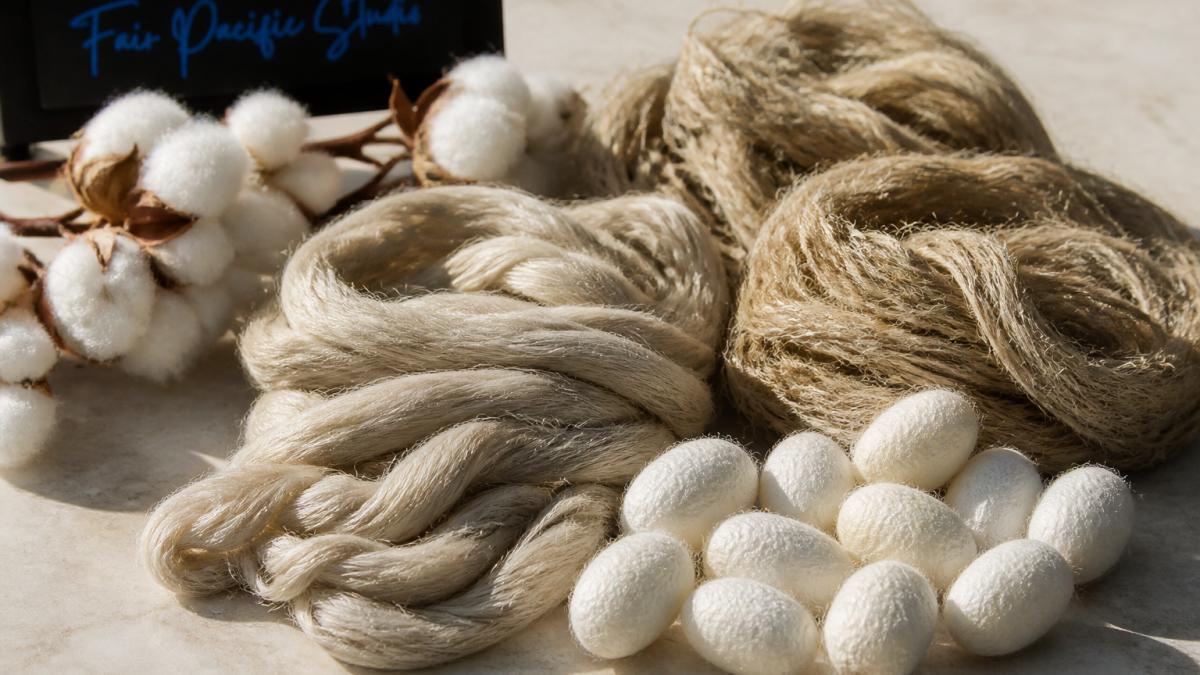
Conventional cotton accounts for a significant share of global pesticide use despite occupying a small percentage of agricultural land. Organic cotton is grown without synthetic pesticides or fertilizers, relying on natural pest management and crop rotation.
Organic cotton farming builds soil health, reduces chemical runoff, and typically uses less water per pound than conventional methods. The tradeoff is higher cost and less consistent availability.
Linen and Hemp
Linen comes from flax and requires minimal pesticide input compared to cotton. It's strong, breathable, and softens with washing, with a texture sewers appreciate for summer garments and home textiles.
Hemp is remarkably sustainable: it grows quickly, needs almost no pesticides, and improves soil quality as it grows. Hemp fabric is durable and improves with age. The challenge is availability, hemp is less commonly stocked than cotton or linen, and blends are more typical than pure hemp.
Recycled and Regenerated Fibers
Recycled fibers transform existing textiles or fiber waste into new material.
Regenerated fibers like TENCEL are made from wood pulp through a closed-loop process where solvents are recycled and reused.
For beginners choosing sustainable fabrics, regenerated fibers offer a practical middle ground: widely available, well-performing, and a genuine reduction in environmental impact compared to conventional synthetics.
One consideration: recycled fibers degrade after limited recycling cycles, and regenerated fibers depend on responsible forest management.
Types of Sustainable Fabrics and Their Trade-Offs
Every sustainable fabric involves compromises. Understanding them helps you choose what matters most.
Organic cotton reduces pesticide use and water consumption during growing, and is breathable, comfortable, and durable.
Linen requires minimal pesticides and improves soil, and is strong and long-lasting.
Hemp is incredibly low-impact during growth and produces durable fabric, though availability remains limited and blends are more common than pure hemp.
Here's how the most common sustainable fabrics compare, with their key benefits and limitations.
| Fabric | Environmental Benefit | Main Trade-Off |
|---|---|---|
| Organic Cotton | Reduces pesticide use and water consumption | Higher cost than conventional cotton |
| Linen | Minimal pesticides required, improves soil | Texture may not suit all projects |
| Hemp | Low-impact growth, produces durable fabric | Limited availability, usually sold as blends |
| Recycled Fibers | Diverts landfill waste, reduces virgin fiber demand | Degrades after limited recycling cycles |
| Regenerated Fibers (TENCEL) | Excellent production performance, renewable sources | Still a processed material, not raw fiber |
Sustainable Fabric Certifications You Should Know
Certifications are the closest thing beginners have to a verification system, but they aren't a single yes-or-no stamp. Each covers a different slice of the supply chain, and a label tells you only what that standard audits. The practical skill is reading the scope, not the logo.
What a certification actually covers
Most textile certifications fall into one of three scopes:
- Fiber-level: certifies how the raw material was grown or produced (for example, organic agriculture standards).
- Processing-level: certifies how the fiber was cleaned, spun, dyed, and finished, including chemical and wastewater rules.
- Chain-of-custody: tracks certified material from source through each handler so the final product can be traced back.
A fabric can carry a fiber-level certificate without any processing or chain-of-custody verification. That is why the same cotton might be described as "organic" in one listing and "GOTS certified" in another, not the same claim.
The certifications beginners will actually see
Global Organic Textile Standard (GOTS). GOTS is a processing standard with a chain-of-custody requirement.
Fair Trade certifications. These focus on labor: wages, working conditions, and worker representation.
Forest Stewardship Council (FSC). FSC certifies that wood pulp used in regenerated cellulose fibers comes from responsibly managed forests.
bluesign. A system-level certification for textile supply chains that screens chemicals, processes, and resources.
Global Recycled Standard (GRS). Verifies recycled content and includes chain-of-custody, social, environmental, and chemical requirements.
A practical verification checklist
When you see a certification claim on a listing or hangtag, run through these questions:
- Which standard, exactly? "Eco-friendly" and "sustainable" are not certifications. Look for the standard's name and, where available, a license or certificate number.
- What scope does it cover? Fiber, processing, or chain of custody? A fiber-level certificate does not vouch for dyeing or finishing.
- Is there a chain-of-custody claim? Without it, certified fiber may be mixed with uncertified fiber before it reaches you.
- Can you check the certificate? Most standard bodies publish a public database or a way to verify a certificate number with the supplier. If a seller cannot point you to one, treat the claim as unverified.
- What does the label not cover? GOTS does not certify farm wages; Fair Trade does not certify environmental performance; FSC does not certify the pulp-to-fiber process. Know the boundary.
- Is the claim on the fabric or the garment? A certified fabric can be cut and sewn in an uncertified facility. If the finished product matters to you, look for a product-level claim.
A missing certification is not proof of a bad fabric. Small mills and independent producers often cannot absorb audit costs, and some genuinely low-impact operations sell without certification. Treat certification as one data point, not a verdict.
The useful question is not "is it certified?" but "what, specifically, does this certificate cover, and can I verify it?" That single habit separates a real claim from a marketing one.
Sustainable Fabric for Sewing: Choosing the Right Material
When selecting sustainable fabrics for a sewing project, start by identifying what the item needs to do.
For lightweight, breathable garments, organic cotton and linen are excellent: comfortable, widely available, and forgiving for beginners.
For durability and structure, bags, upholstery, outerwear, hemp and densely-woven linen hold up exceptionally well.
Where drape and softness matter, regenerated fibers like TENCEL deliver, and are becoming easier to source.
How to Choose Sustainable Fabric: A Practical Framework
Start by asking three questions about any sustainable fabric you're considering: I recommend exploring ethical consumerism principles to understand how your fabric choices fit into broader purchasing decisions.
What will this item experience? A everyday work shirt needs different properties than a special-occasion dress.
Where does it come from? Understand the supply chain as much as you reasonably can. Certifications help.
What happens at the end? This is where I think most guides fall short.
I recommend a simple comparison: list the fabrics you're considering, note their certifications, check performance characteristics, and assess end-of-life prospects.
Care, Repair, and End-of-Life: Making Your Fabrics Last
The most sustainable fabric is one you wear for years, but care and disposal are where most beginner guides stop at "wash cold." The fuller picture includes what comes off your clothes in the wash, what can realistically be recycled, and what happens when a garment truly wears out.
Washing, shedding, and what goes down the drain
Synthetic and blended fabrics shed tiny fibers during normal wear and washing (Microfiber Pollution). Those fibers travel with wastewater to treatment plants, and a portion ends up in rivers, lakes, and oceans. Natural fibers also shed, but they break down more readily; synthetic fibers do not.
What this means in practice:
- Blends are the tricky case. A cotton-polyester blend combines a fiber that biodegrades with one that persists. The garment is neither fully compostable nor easily recyclable, and it still sheds synthetic fibers.
- Wash less, wash fuller. Running full loads reduces the mechanical action per garment and the number of wash cycles overall.
- Use a microfiber-catching wash bag or filter. These are widely sold for home machines and capture a portion of shed fibers before they reach wastewater.
If you sew with synthetic or blended fabrics, a wash bag is a low-cost habit that addresses the shedding issue directly. It does not solve the problem, but it reduces what leaves your machine.
Care that actually extends lifespan
Cold water, mild detergent, and air drying remain the basics. Beyond that:
- Wash inside out to reduce surface abrasion on the face of the fabric.
- Use mesh bags for delicates to prevent snags and stretching.
- Rest garments between wears so fibers recover and you wash less often.
Repair as a sustainability practice
A small tear, a loose seam, or a worn hem is fixable. Basic hand-sewing skills, a running stitch, a backstitch, a simple darn, extend garment life by years. For knits, darning and visible mending are practical and increasingly common; for woven fabrics, patching from the inside preserves the look. Every year of added wear displaces the water, energy, and chemicals a replacement garment would require.
End-of-life: what actually happens to each fiber type
Disposal options depend on fiber content, and the honest answer is that most textiles are not recycled into new clothing.
- Pure natural fibers (cotton, linen, hemp, silk, wool). These biodegrade under the right conditions. Small quantities of untreated, undyed natural fiber can be composted at home; dyed and finished fabrics are better sent to textile recycling. Check local rules before assuming either option.
- Regenerated cellulose fibers. These are generally biodegradable, but finishes and dyes can affect compostability. They are not widely recycled back into new fiber at scale.
- Synthetics (polyester, nylon, acrylic). These do not biodegrade and are the most problematic in landfill. Mechanical recycling exists but is limited, and most post-consumer synthetic textiles are downcycled into lower-value products rather than new clothing.
A realistic disposal hierarchy
- Keep wearing it. Repair, alter, or restyle.
- Pass it on. Resale, donation, or a clothing swap keeps the garment in use.
- Repurpose. Cut into rags, bags, quilts, or smaller projects.
- Recycle. Use textile recycling programs where available; expect downcycling rather than fiber-to-fiber recycling for most materials.
- Compost only pure, untreated natural fibers, and only where local rules allow.
The fabric choice you make at the start determines your options at the end. Pure natural fibers keep the most disposal paths open; blends close most of them. If end-of-life matters to you, factor it into the purchase, not just the care routine.
Frequently Asked Questions
What certifications should I look for when buying sustainable fabrics?
Look for Global Organic Textile Standard (GOTS) for organic fibers, Fair Trade Certified for ethical labor, and FSC certification for wood-based regenerated fibers. OEKO-TEX certifies low chemical use. These certifications verify different aspects of sustainability, environmental impact, worker conditions, or chemical safety, so check which matters most to your project.
Are natural fabrics always more sustainable than synthetic fabrics?
Not always. While natural fibers biodegrade, conventional cotton uses heavy pesticides and water. Recycled polyester diverts waste from landfills but sheds microfibers. The sustainability depends on how the fiber was grown, processed, and how long the garment lasts. A durable, well-made piece from any fiber beats a fragile trendy item.
What is the easiest sustainable fabric for beginners to sew?
Linen and organic cotton are forgiving for beginners because they hold their shape and don't stretch unpredictably. Avoid slippery fabrics like silk or rayon until you gain experience. Look for medium-weight options (around 4-6 ounces per square yard) that are stable to cut and stitch without puckering or slipping under the needle.
How can I tell whether a fabric is sustainably made?
Check the product label for certifications like GOTS, Fair Trade, or OEKO-TEX. Ask the maker directly about fiber sourcing, dye processes, and water use. Transparent brands document their supply chain. Be skeptical of vague claims like 'eco-friendly' without specifics. Handmade or small-batch producers often have traceable sourcing they're proud to share.
Choosing sustainable fabrics doesn't require perfection, it requires intention. Start with one project, pick a fabric that aligns with your values and your needs, and notice how it performs. Each choice you make builds your understanding of what sustainable fabrics actually mean in practice. The fabrics I've covered here are accessible, available, and genuinely lower-impact than conventional alternatives. Your choices compound over time.
