
Last Updated: October 23, 2026
Quick Summary
Is small batch jewelry worth the price? Yes, if you wear pieces regularly, keep them for years, and value quality materials and uniqueness. The premium reflects real differences in labor, materials, and production methods, but it's only justified if you actually benefit from those differences over time.
- Handmade jewelry costs more due to skilled labor, higher-quality materials, and individual hand-finishing versus factory automation.
- Handcrafted pieces outlast fast-fashion alternatives significantly when worn daily and kept long-term.
- Ask makers directly about material sourcing, production time, durability, and repairability before purchasing.
- Small batch jewelry is worth the premium for daily wear and personalization, but not for trendy accessories you'll discard seasonally.
- Handcrafted jewelry offers uniqueness, customization, and direct connection to the maker that mass-produced pieces cannot provide.
Table of Contents
- The Real Cost of Small Batch Jewelry
- Handmade Jewelry vs. Mass-Produced Jewelry: Where the Price Difference Comes From
- Why Handmade Jewelry Costs More: Breaking Down the Labor and Materials
- How to Evaluate Handmade Jewelry Quality Before You Buy
- When Small Batch Jewelry Is and Isn't Worth the Premium
- What Sets Handcrafted Pieces Apart: Uniqueness and Personal Connection
- Conclusion: Making the Right Choice for Your Jewelry Investment
- Frequently Asked Questions
The Real Cost of Small Batch Jewelry
Is small batch jewelry worth the price? That's the question every thoughtful buyer asks before spending on handcrafted pieces. The honest answer: it depends on what you're comparing it to, what materials matter to you, and whether you value uniqueness and longevity over fast fashion.
Small batch jewelry operates in a completely different economic model than mass-produced alternatives. When I design and create handcrafted pieces at Fair Pacific Studio, every step, from sourcing reclaimed copper and sterling silver to hand-finishing each component, costs more in labor and materials than industrial production.
The real tension isn't "handmade versus cheap." It's "am I paying for quality that will last, or am I paying for a story?" Both can be true. But they're not the same thing, and conflating them is where most buyers go wrong.
Handmade Jewelry vs. Mass-Produced Jewelry: Where the Price Difference Comes From
The price gap between handcrafted jewelry and mass-produced jewelry reflects fundamental differences in how each is made.
Mass-produced jewelry relies on economies of scale. A factory produces thousands of identical pieces using standardized molds, automated machinery, and assembly-line workflows. The per-unit cost drops dramatically.
Handmade jewelry involves human skill applied to individual pieces. When I create handcrafted pieces, I'm not replicating a mold hundreds of times.
The other difference: customization and limited runs. Mass production demands uniformity. Handmade work accommodates variation, personalization, and small batches.
| Aspect | Handmade Jewelry | Mass-Produced Jewelry |
|---|---|---|
| Production Method | Hand-forged, hand-finished per piece | Automated molds and machinery |
| Labor Cost per Piece | High (hours of skilled work) | Low (minutes of assembly) |
| Material Waste | Higher (hand-shaping produces scrap) | Lower (dies are efficient) |
| Customization | Common and feasible | Rare or unavailable |
| Quality Consistency | Varies slightly (handmade character) | Uniform (identical pieces) |
| Retail Markup | Typically 2-3x production cost | Typically 5-8x production cost |
Why Handmade Jewelry Costs More: Breaking Down the Labor and Materials
The price of handcrafted jewelry reflects three real expenses: materials, labor, and overhead.
Is Handmade Silver Jewelry TOO Expensive?
Gus Villa Jewelry
Materials are straightforward. A sterling silver pendant uses a specific weight of silver. Reclaimed copper costs less than virgin copper but requires sourcing and verification.
Labor is where the biggest price difference emerges. Handcrafted jewelry requires skilled work. Designing a piece takes time. Hand-forging takes time.
Many buyers underestimate labor because they compare handmade jewelry to factory jewelry and assume the difference is just "paying for handmade as a concept." It's not.
Overhead includes studio rent, tools, equipment maintenance, insurance, and business operations. A one-person studio like mine has lower overhead than a factory, but it's still there.
How to Evaluate Handmade Jewelry Quality Before You Buy
Not all handmade jewelry is created equal. Handcrafted doesn't automatically mean durable or well-designed. I've seen poorly-made handmade pieces and beautifully-crafted mass-produced ones. Quality in handmade jewelry depends on specific factors you can assess before buying.
Check the Materials and Sourcing
The first step is understanding what the piece is actually made from. Sterling silver, solid gold, brass, and copper are real materials with known properties. Gold plating, silver plating, and gold-filled are different, they're base metals with a thin layer of precious metal.
Ask the maker directly: Is this solid sterling silver or plated? Is the stone natural or lab-created? Is the copper reclaimed or virgin? Are there certifications or documentation available? Reputable makers provide this information readily.
Sourcing matters too. Reclaimed materials have environmental value, but they also have real costs in sourcing and verification. If a maker emphasizes sustainable sourcing, ask what that actually means and whether there's documentation.
Examine the Craftsmanship and Design
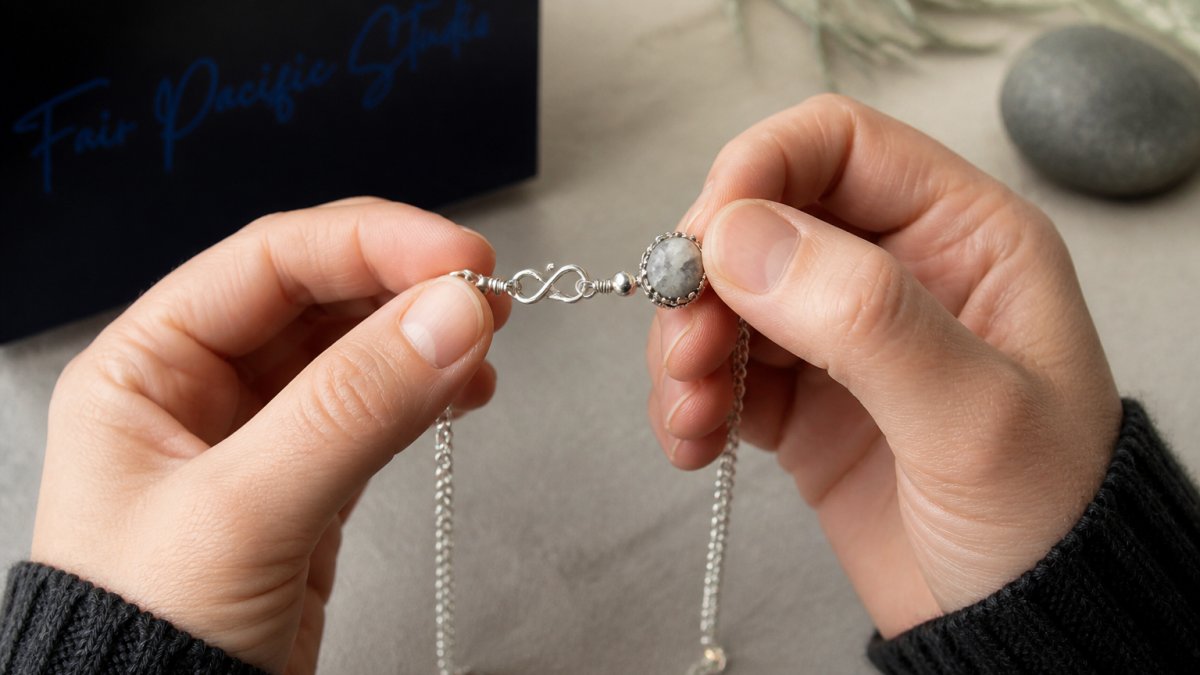
Look at photos closely. Are the edges smooth or rough? Is the finish consistent or patchy? Are there visible solder lines or rough spots? For a necklace, examine the clasp, is it secure and well-finished, or does it look hastily assembled?
Design is subjective, but execution is not. A well-executed design shows attention to detail. Proportions feel intentional. Finishes are deliberate, if a piece has a rough, textured surface, that should be intentional and consistent, not accidental.
I recommend asking for multiple photos from different angles, including close-ups of clasps, joints, and finishes. If a maker won't provide detailed photos, that's another warning sign.
Verify Durability and Longevity
Ask specific questions about durability. Can this necklace be worn daily, or is it delicate? Will the stone scratch or crack easily? Does the clasp need special care? What happens if it breaks, can it be repaired?
Handmade doesn't guarantee durability. A beautifully-designed piece made from soft brass will wear faster than a simple sterling silver piece. A delicate stone setting will be more vulnerable than a bezel setting.
Longevity is also about repairability. Can the piece be fixed if a clasp breaks or a stone loosens? Handmade jewelry is often easier to repair than mass-produced jewelry because it was made by hand, not by a proprietary machine.
When Small Batch Jewelry Is and Isn't Worth the Premium
Here's the direct answer: small batch jewelry is worth the premium when you're paying for quality, durability, and uniqueness that you actually value and will use.
Small batch jewelry is worth the price when:
- You wear jewelry daily and need pieces that will last years, not months. Handcrafted pieces with quality materials and construction outlast fast-fashion alternatives significantly.
- You value uniqueness. If wearing the same piece as thousands of others bothers you, handmade work delivers actual individuality.
- You care about materials and sourcing. If sustainable or ethically-sourced materials matter to you, handmade makers are more likely to offer transparency and options.
- You want personalization. Custom sizing, engraving, or design modifications are standard in handmade work and rare in mass production.
- You plan to keep pieces long-term. The higher initial cost amortizes over years of wear.
Small batch jewelry is not worth the premium when:
- You're treating it as a trendy accessory you'll discard in a season. If you're fashion-forward and cycle through styles quickly, mass-produced pieces are more economical.
- You don't care about materials or sourcing. If sterling silver versus plated silver is irrelevant to you, the price difference isn't justified.
- You're buying based on the "handmade" label alone, without evaluating actual quality. Some handmade pieces are poorly-made. The label doesn't guarantee durability.
- You need a specific design that mass-produced jewelry already offers perfectly. If you love a style and don't need customization, buying the cheaper version makes sense.
- You're price-sensitive and budget is the primary constraint. Handmade jewelry is a discretionary purchase, not a necessity.
The honest take: handmade jewelry is worth the premium for people who will actually use it, care about the materials, and keep pieces for years. For everyone else, it's a luxury you may not need.
What Sets Handcrafted Pieces Apart: Uniqueness and Personal Connection
Beyond durability and materials, handcrafted jewelry offers something mass-produced pieces don't: a direct relationship between maker and wearer.
When you buy from a handmade maker, you're not buying from a corporation or a factory. You're buying from a person who designed and created the piece.
Uniqueness is real in handmade work. Even when a maker produces similar designs repeatedly, each piece has subtle variations. Hand-forging creates organic texture.
Personalization is another differentiator. You can commission a piece with specific stones, custom sizing, engraving, or design modifications. That level of customization is rare in mass-produced jewelry.
There's also the question of supporting independent makers.
Conclusion: Making the Right Choice for Your Jewelry Investment
Is small batch jewelry worth the price? Yes, if you're evaluating it honestly against what you actually need and value.
The price premium reflects real differences in labor, materials, and production methods. It's not arbitrary markup or marketing hype. But the premium is only justified if you care about those differences and will benefit from them over time.
Before buying, ask yourself three questions:
- Will I wear this piece regularly and keep it for years?
- Do the materials, sourcing, or craftsmanship matter enough to me to justify the cost?
- Do I value uniqueness and personalization, or do I prefer uniformity?
If you answered yes to at least two of these, handcrafted jewelry is likely worth the investment. If you answered no to all three, mass-produced alternatives are a smarter choice.
When you're ready to explore handcrafted pieces that combine quality materials with thoughtful design, Fair Pacific Studio offers jewelry that captures the raw beauty of natural materials while prioritizing durability and ease-of-use. I design with intention, ensuring that every clasp, every edge, and every finish reflects care and skill. Explore Fair Pacific Studio's handcrafted collection to see pieces that balance bohemian aesthetics with modern minimalism.
Frequently Asked Questions
Is handmade jewelry better quality than mass-produced jewelry?
Quality depends on the maker and their standards, not the production method alone. Handmade jewelry can offer superior craftsmanship, attention to detail, and material choices, but mass-produced pieces from reputable manufacturers can also be well-made. The difference is that small batch jewelry allows makers to control every step and often use higher-grade materials. When evaluating quality, examine the specific piece: check the metal weight, stone setting, clasp durability, and finish. Ask the maker about their sourcing and whether they stand behind repairs.
Why does small batch jewelry cost more?
Small batch jewelry costs more because of labor intensity, material quality, and overhead. Each piece requires hours of skilled hands-on work, design, cutting, shaping, soldering, finishing, and quality control. Materials like reclaimed copper, sterling silver, and genuine gemstones cost more than plated alternatives. Makers also absorb costs for tools, studio space, and business operations. Unlike factories that spread costs across thousands of identical pieces, independent makers price each piece to cover time, materials, and sustainability. You're paying for craftsmanship and originality, not factory efficiency.
How can I tell if handmade jewelry is worth the price?
Evaluate the maker's transparency and the piece itself. Ask where materials come from and whether they're responsibly sourced. Request photos or videos showing the piece and its details. Check the weight and metal purity, genuine sterling silver should be marked 925. Ask about durability: how long will the clasp last, can it be repaired, what's the return policy? Compare the specific design and materials to similar pieces. Read reviews about longevity and customer service. If the maker can explain their process, materials, and pricing clearly, that's a strong sign the price reflects genuine value.
What should I look for when buying artisan jewelry?
Look for makers who share their process and materials openly. Check that metals are marked with purity stamps (925 for sterling silver, 14K or 18K for gold). Examine how stones are set, secure, professional settings indicate quality. Evaluate the clasp or closure mechanism for durability and ease of use. Ask about customization options and whether pieces can be resized or repaired. Verify return policies in case a piece doesn't meet your expectations. Consider the maker's reputation through reviews and how long they've been in business. Authentic artisan jewelry should feel intentional in design and construction.
The real question isn't whether handmade jewelry is worth the price in abstract. It's whether you are the kind of person who will appreciate and use it fully. If you are, handcrafted pieces become not just jewelry, they become investments in quality, uniqueness, and values you actually care about.
